Charity Impact & Type Explorer
Select a Charity Category to Explore
Relief of Poverty
Immediate SurvivalCore Activities
Impact Timeline
Short-term to Medium-term
Who is this for?
I want to see tangible results quickly.
Food sorting, shelter maintenance, direct aid distribution.
Example Organizations
Local soup kitchens, homeless shelters, microfinance programs.
You want to help. That much is clear. But when you look at the landscape of charity, which is an organization dedicated to helping those in need through financial aid, services, or advocacy, it can feel overwhelming. There are thousands of causes, millions of dollars moving around, and endless acronyms. If you’ve ever wondered how these groups are actually classified, you aren’t alone. Understanding the four main types of charity isn’t just academic-it helps you decide where your money or time will make the biggest impact.
The classification system for charities varies slightly by country, but the core logic remains the same globally. In most legal frameworks, including the UK’s Charities Act and similar structures in the US and New Zealand, charities fall into four distinct buckets based on their purpose. These are: Relief of Poverty, Advancement of Education, Advancement of Health or Saving of Lives, and Other Purposes Beneficial to the Community (which includes religion, arts, and environmental protection). Let’s break down exactly what each one means for you as a donor or volunteer.
1. Relief of Poverty
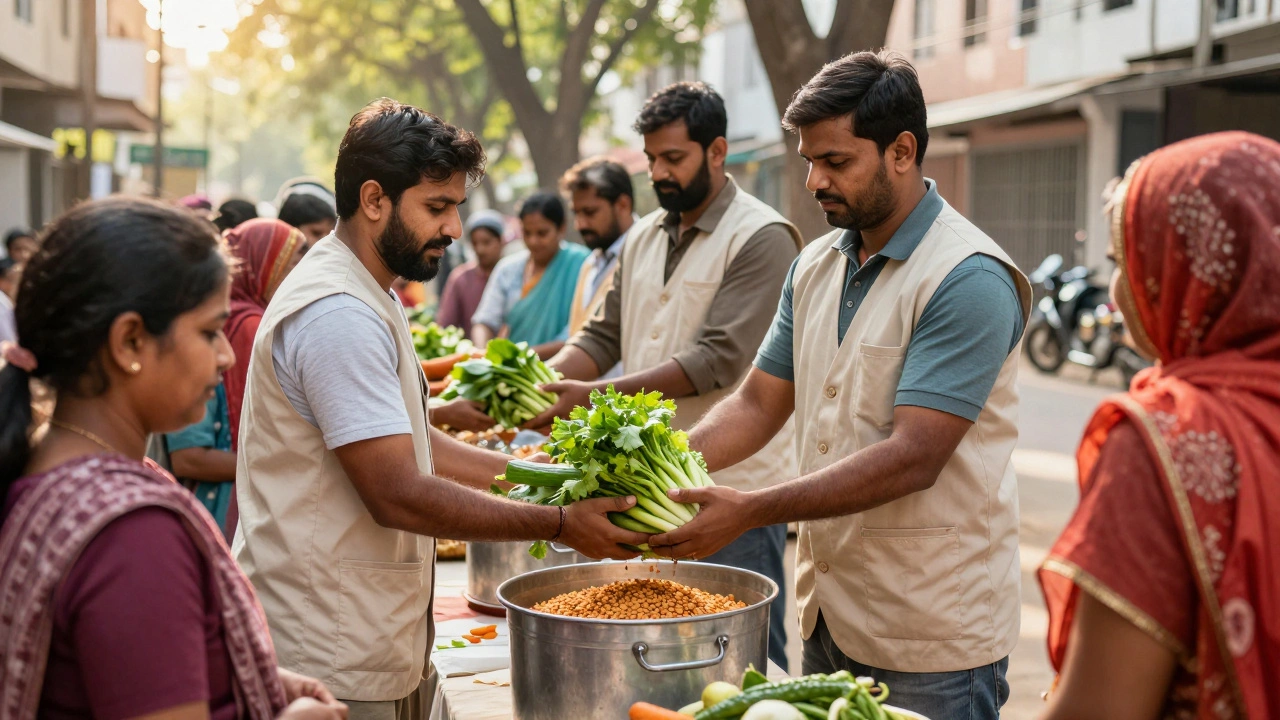
This is perhaps the most intuitive type of charity. When people think of "giving back," they often picture this category first. It involves providing direct assistance to individuals who lack the basic resources needed to survive or thrive. This doesn’t just mean handing out cash; it includes food banks, homeless shelters, emergency housing, and microfinance programs that help people start small businesses.
The key here is immediacy. These organizations address urgent needs. For example, a local soup kitchen provides meals today, while a job training program helps someone secure income next month. The goal is to lift people out of destitution. As a donor, you might ask yourself: Does this group provide immediate relief, or do they work on long-term systemic change? Both are valid, but they serve different functions within the poverty relief ecosystem.
- Direct Aid: Food, clothing, shelter.
- Financial Support: Grants for rent, utilities, or medical bills.
- Empowerment: Job skills training, literacy programs.
If you prefer seeing tangible results from your donation-like knowing exactly how many families received a winter coat-this is the sector for you. Transparency is crucial here because the line between charity and dependency must be carefully managed by professional staff.
2. Advancement of Education
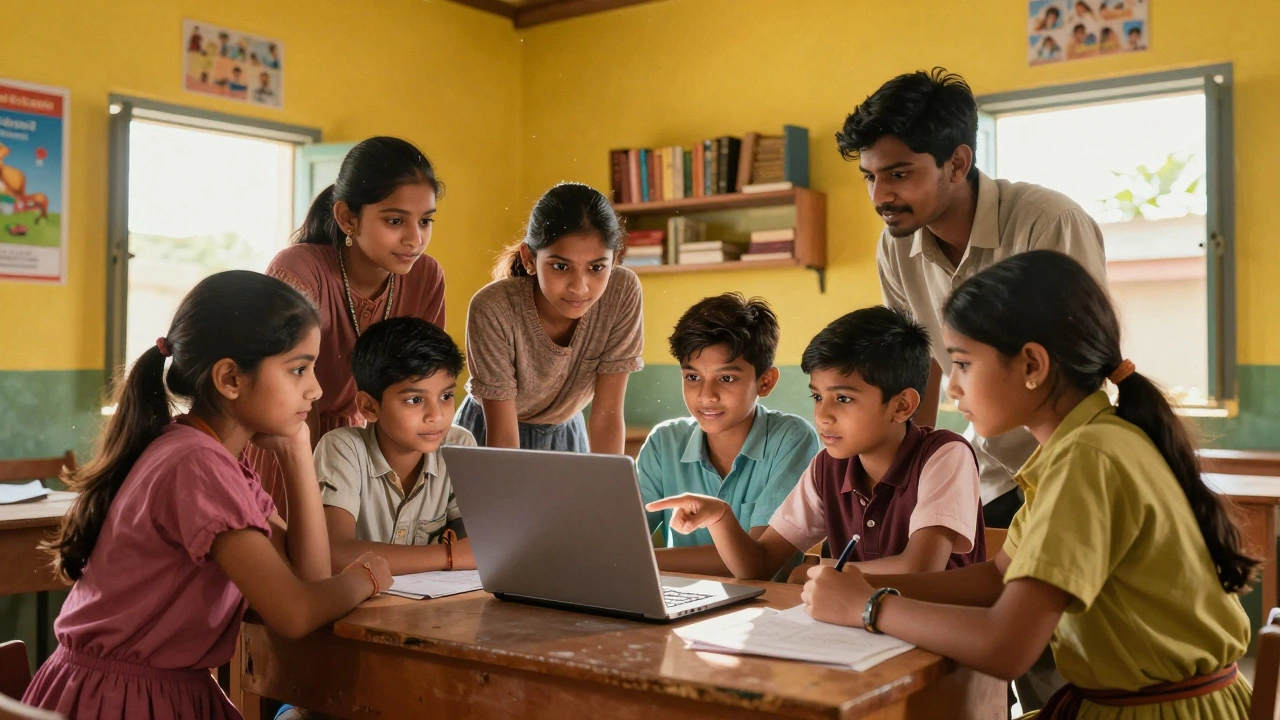
Education charities don’t just run schools. While supporting traditional K-12 education is part of it, this category is much broader. It includes scholarships, library services, vocational training, adult education, and even online learning platforms that provide free access to knowledge. The underlying principle is that education empowers individuals to improve their own lives and contribute to society.
Think about the difference between donating to a university endowment versus funding a coding bootcamp for underprivileged youth. Both advance education, but they target different demographics and outcomes. One focuses on higher-level research and degree completion; the other focuses on rapid skill acquisition for employability. Both are vital.
In recent years, digital literacy has become a massive sub-sector within educational charity. With the rise of remote work and AI tools, organizations that teach tech skills to older adults or rural communities are filling critical gaps. If you believe that knowledge is the great equalizer, this type of charity aligns with your values.
3. Advancement of Health or Saving of Lives
This category covers a wide range of activities, from funding cancer research to running mental health hotlines. It includes hospitals, clinics, disease prevention campaigns, and rehabilitation centers. The common thread is improving physical or mental well-being.
Health charities often require significant scientific expertise. Donors in this space need to understand that some projects take decades to show results. For instance, funding a clinical trial for a new drug might not yield a cure for ten years, whereas funding a vaccination drive can prevent thousands of cases immediately. Both are essential parts of the health ecosystem.
Mental health has seen a surge in charitable support over the last few years. Organizations focusing on suicide prevention, trauma counseling, and stress management for first responders are growing rapidly. This shift reflects a broader societal understanding that health is not just the absence of disease, but a state of complete well-being.
4. Other Purposes Beneficial to the Community
This is the catch-all category, but it’s far from vague. It includes religion, the arts, heritage conservation, animal welfare, environmental protection, and human rights advocacy. The defining feature is that the benefit must be public, not private. A private club cannot be a charity, but a community theater that offers free tickets to low-income residents can be.
Environmental charities, for example, focus on preserving natural resources for future generations. This includes reforestation projects, ocean cleanup initiatives, and climate change education. Similarly, arts charities preserve cultural heritage and provide creative outlets for self-expression, which contributes to social cohesion and individual mental health.
Religious charities often operate within this framework, providing spiritual guidance alongside practical aid like refugee resettlement or disaster relief. The key is that the religious aspect serves a broader community benefit rather than just reinforcing faith among existing members.
| Type | Primary Goal | Example Activities | Impact Timeline |
|---|---|---|---|
| Relief of Poverty | Immediate survival & stability | Food banks, shelters, emergency grants | Short-term to Medium-term |
| Advancement of Education | Knowledge & skill development | Scholarships, libraries, coding camps | Medium-term to Long-term |
| Advancement of Health | Physical & mental well-being | Hospitals, research, mental health lines | Variable (Immediate to Decades) |
| Other Public Benefits | Cultural, environmental, spiritual value | Museums, reforestation, refugee aid | Long-term |

How to Choose the Right Type for You
Knowing the four types helps you filter through the noise. Start by asking yourself what motivates you. Do you want to see immediate change? Look at poverty relief. Do you care about long-term societal shifts? Consider education or environmental groups. Do you have a personal connection to health issues? Then health charities might resonate deeply.
Also, consider your skills. If you’re a teacher, an education charity might benefit from your pro bono time more than a financial donation. If you’re a marketer, a smaller arts organization might need your expertise to reach a wider audience. Volunteering your specific talents can sometimes be more valuable than money.
Finally, do your due diligence. Check if the organization is registered as a charity in your jurisdiction. In New Zealand, you can check the Charities Register. In the US, look for 501(c)(3) status. This ensures that your donation is tax-deductible and that the organization is accountable to regulatory bodies.
Common Misconceptions About Charity Types
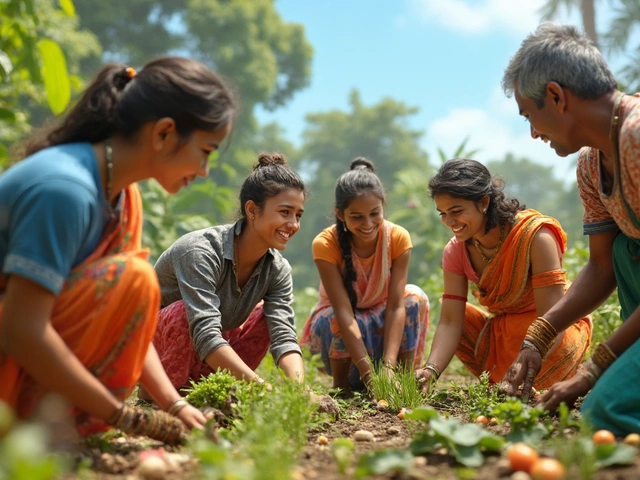
One big myth is that only large, international NGOs count as "real" charities. Local community groups often have lower overhead costs and deeper connections to the people they serve. A neighborhood garden project might seem small, but it addresses food security, community bonding, and environmental education simultaneously.
Another misconception is that religious charities are exclusive. Many religious organizations serve anyone regardless of belief. They often have robust infrastructure for disaster relief and humanitarian aid because of their global networks.
Lastly, don’t assume that "saving lives" only applies to medicine. Environmental charities save lives by cleaning air and water. Arts charities save lives by reducing isolation and depression. The definition of "benefit" is broader than we often give it credit for.
Can an organization belong to more than one type of charity?
Yes, many charities have multiple objectives. For example, a hospital (health) might also run a nursing school (education). However, they usually register under one primary purpose for legal clarity. When evaluating such organizations, look at their annual report to see how they allocate funds across these different areas.
Is my donation tax-deductible if I give to any of these four types?
Generally, yes, provided the organization is officially registered as a charity in your country. In New Zealand, donations to DHBs (Donation Tax Deductible Bodies) are deductible. In the US, donations to 501(c)(3) organizations are deductible. Always ask for a receipt and verify the organization's status before giving.
Which type of charity has the lowest overhead costs?
There is no single answer, as overhead varies by size and complexity. Generally, smaller, local community groups (often falling under "Other Purposes" or "Poverty Relief") may have lower administrative costs than large international health research institutes. However, low overhead doesn't always mean high efficiency; sometimes higher spending on administration leads to better strategic outcomes.
How do I know if a charity is legitimate?
Check official government registers. In New Zealand, use the Charities Service website. In the UK, use the Charity Commission. In the US, use Guidestar or the IRS Tax Exempt Organization Search. Legitimate charities publish annual reports and financial statements that detail how they spend their money.
Can I volunteer instead of donating money?
Absolutely. All four types of charity rely heavily on volunteers. Poverty relief orgs need food sorters, education charities need tutors, health charities need patient advocates, and environmental groups need tree planters. Your time and skills are often just as valuable as your financial contribution.