
Volunteer Commitment Calculator
Use this tool to determine your volunteer tier based on weekly hours and calculate your annual impact. Consistency beats intensity.
There is no magic number. If you are sitting there wondering if your five hours a month makes you a "bad" person, stop right now. The guilt trip sold by some non-profits is just that-a sales tactic. They want your time because they need bodies to fill shifts, not necessarily because they care about the quality of your contribution. But here is the real question: how much time actually creates an impact without burning you out?
The answer depends entirely on what you are trying to achieve. Are you looking to pad your resume for college applications? Do you want to learn a new skill like coding or carpentry? Or do you genuinely want to help feed the homeless in your city? Each goal requires a different volunteer commitment. Let’s break down what constitutes "good" volunteering based on reality, not idealism.
The Myth of the "Ideal" Volunteer
We often hear that you should give "whatever you can." That is vague and unhelpful. In the world of community serviceunpaid work done for the benefit of others, consistency beats intensity every single time. Showing up for one hour once a month is infinitely more valuable than showing up for ten hours once a year and then disappearing.
Organizations hate turnover. It costs them money and time to train new people. So, when we talk about "good" hours, we are really talking about reliability. A "good" volunteer is someone who shows up when they say they will, even if that is only for two hours on a Saturday morning. Don’t let anyone shame you into signing up for twenty hours a week if you have a full-time job and a family. That recipe leads to volunteer burnout, which helps no one.
Defining Your Goal: Why Are You Volunteering?
Before you pick a number, you need to know why you are doing this. Your motivation dictates the minimum effective dose of time.
- For Resume Building: If you are a student or early-career professional, recruiters look for sustained engagement. A one-off event looks like box-ticking. To show genuine interest, aim for at least three to six months of consistent service. Even four hours a week adds up to over 50 hours in three months, which looks solid on a CV.
- For Skill Acquisition: Want to learn graphic design or project management through volunteering? You need immersion. Think of it as an unpaid internship. You likely need 10-15 hours a week to see real growth and build a portfolio.
- For Community Impact: If your goal is pure altruism, start small. One hour a week is sustainable. Over a year, that is 52 hours. That is enough time to mentor a child, walk dogs at a shelter, or sort food at a bank. Small, steady drops wear away the stone.
The Three Tiers of Volunteer Commitment
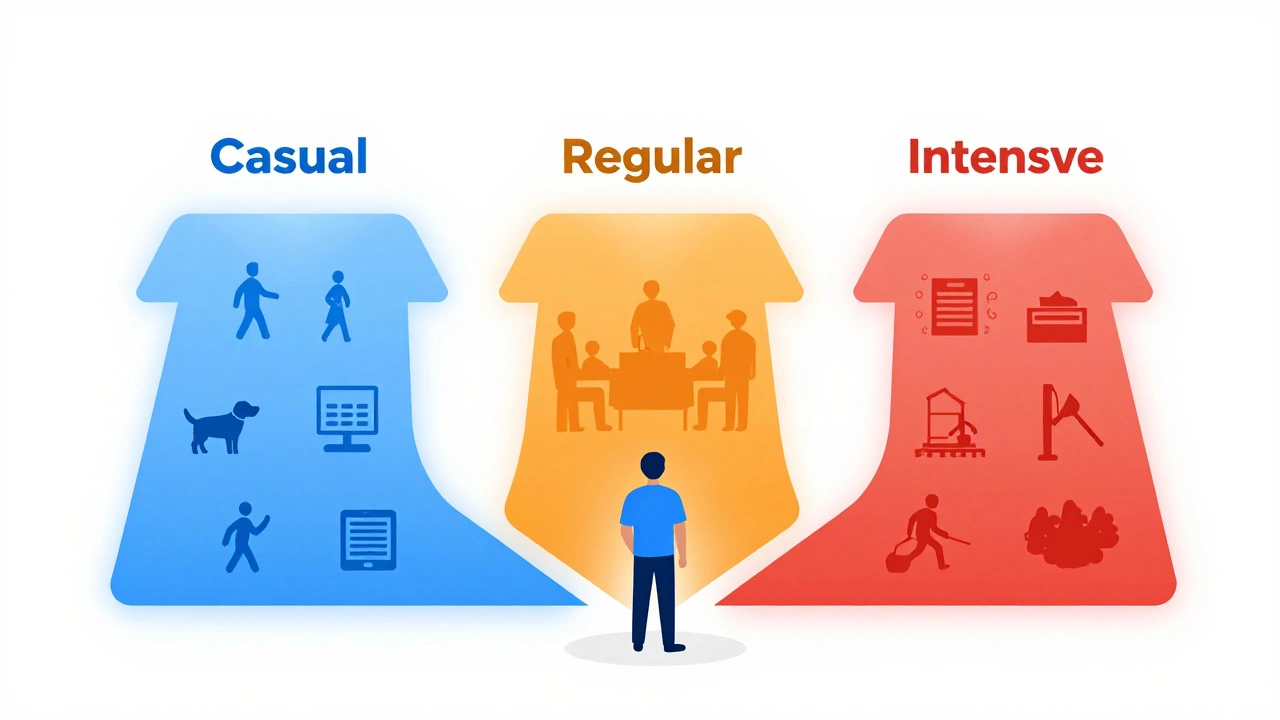
To make this concrete, let’s categorize volunteering into three tiers. This helps you choose a level that fits your life without causing stress.
| Tier | Hours Per Week | Best For | Risk Factor |
|---|---|---|---|
| Casual / Micro-Volunteering | 1-3 hours | Busy professionals, students, testing the waters | Low impact per session; requires high consistency |
| Regular / Standard | 4-8 hours | Building skills, deep community ties, resume building | Moderate time pressure; risk of scheduling conflicts |
| Intensive / Dedicated | 10+ hours | Career changers, retirees, crisis response teams | High risk of burnout; requires strong organizational support |
Most people fall into the "Casual" or "Regular" categories. And that is perfectly fine. In fact, it is better. Organizations that rely on volunteers working 10+ hours often struggle with retention because those volunteers quit after a few months. The "Regular" tier is the sweet spot for long-term sustainability.
Quality Over Quantity: The Engagement Factor
Here is a hard truth: 10 hours of distracted, resentful volunteering is worse than 2 hours of focused, enthusiastic helping. When you are physically present but mentally checking out, you are not adding value. You might even be creating extra work for staff who have to manage you.
Good volunteering requires emotional presence. If you are sorting books at a library, take pride in organizing them correctly. If you are serving meals, engage with the people you are serving (if appropriate). This depth of engagement matters more to the recipient than the clock on the wall. A study by the Corporation for National and Community Service found that volunteers who felt their skills were being used effectively reported higher satisfaction levels, regardless of the total hours logged.
Avoiding Volunteer Burnout
Burnout is real. It happens when you give more than you have. Signs include dreading your next shift, feeling exhausted before you even start, or snapping at friends and family because you are "too busy saving the world."
If you feel these signs, cut your hours immediately. There is no shame in stepping back. In fact, protecting your energy ensures you can volunteer for years, not just weeks. Set boundaries. Tell the coordinator, "I can only commit to Tuesdays from 6 to 8 PM." Stick to it. If they pressure you to do more, find another organization. A good non-profit organization respects your limits.

Practical Tips for Managing Your Time
Integrating volunteering into a busy schedule requires strategy. Here is how to make it stick:
- Start with a Trial Period: Commit to one month. See how it feels. If it works, extend it. If it doesn’t, leave gracefully.
- Block Your Calendar: Treat your volunteer slot like a doctor’s appointment. You wouldn’t cancel on your doctor for a casual whim; don’t cancel on the people relying on you.
- Combine Activities: Can you volunteer while walking your dog? Some shelters allow you to bring pets. Can you use your professional skills remotely? Online tutoring or social media management can be done in short bursts during lunch breaks.
- Track Your Impact: Keep a simple log. Not just hours, but what you did. Did you teach five kids to read? Did you plant 50 trees? Seeing the tangible result reinforces the value of your time.
The Role of Organizations in Setting Expectations
It is not just on you. Organizations have a duty to define clear expectations. Vague requests like "we need help" lead to mismatched expectations. A transparent organization will tell you exactly what is needed: "We need someone to man the front desk for four hours every Saturday morning."
If an organization cannot provide structure, it is a red flag. Chaos is not a strategy. Look for groups that offer training, clear roles, and regular check-ins. This structure protects both you and the cause.
Conclusion: Find Your Rhythm
So, how many hours is considered good? The best answer is: however many you can sustain consistently without resentment. Whether that is two hours a month or ten hours a week, the "goodness" comes from the reliability and the heart you put into it. Stop comparing yourself to the super-volunteers on social media. They are the outliers. Focus on your capacity, your goals, and your well-being. Show up, do the work, and go home knowing you made a difference. That is enough.
Is 50 hours of volunteering a lot?
Yes, 50 hours is a significant commitment. For context, if you volunteer 5 hours a week, that takes 10 weeks. If you volunteer 1 hour a week, it takes nearly a year. Most employers and colleges view 50+ hours as evidence of serious dedication, especially if it was sustained over several months rather than crammed into a weekend.
What is the average number of hours volunteers work?
According to recent data from the Bureau of Labor Statistics, the median number of hours volunteered per year is around 52 hours. This translates to roughly one hour per week. However, this varies widely by age group and type of organization. Younger volunteers often log fewer hours due to school and work commitments, while retirees may log significantly more.
Can I volunteer too much?
Absolutely. Over-volunteering can lead to physical exhaustion, mental stress, and neglect of personal relationships and paid work. It can also reduce the quality of your contribution. If you are constantly tired or resentful, you are giving too much. Scale back to a sustainable level.
Does micro-volunteering count?
Yes. Micro-volunteering involves short, task-based activities that can be done online or offline in minutes. Examples include translating a document, reviewing a survey, or designing a logo. While individual tasks are small, the cumulative impact can be huge. It is a valid and growing form of civic engagement.
How do I choose the right number of hours?
Assess your current schedule honestly. Identify gaps where you have low energy or free time. Start with a conservative estimate (e.g., 2-3 hours a week) and adjust after a month. Prioritize consistency over volume. It is better to commit to less and deliver reliably than to over-promise and under-deliver.