Environmental Problem Classifier
Test Your Knowledge
Read the scenario below and select which category it belongs to.
A coastal town notices that their local fish stocks have collapsed because commercial trawlers are catching fish faster than they can reproduce.
You walk outside, breathe in, and maybe you don't notice the smog hanging over the city or the plastic bottle bobbing in the local creek. But those signs are there. When we talk about environmental problems, it can feel like a giant, tangled mess. Is it the air? The water? The fact that we're running out of trees? It’s all connected, sure, but trying to fix everything at once is impossible. That’s why scientists and policymakers often sort these issues into three distinct buckets. Understanding these groups helps us see where the pressure is coming from and what actually needs fixing.
This isn’t just academic trivia. If you’re trying to decide which charity to support, which policy to back, or even how to reduce your own footprint, knowing the difference between pollution, resource depletion, and ecological degradation changes everything. One problem might need a filter on a smokestack; another needs a law protecting a forest; a third needs a complete shift in how we consume energy. Let’s break down these three major categories so you can navigate the conversation without getting lost in jargon.
Pollution: Contaminating Our Surroundings
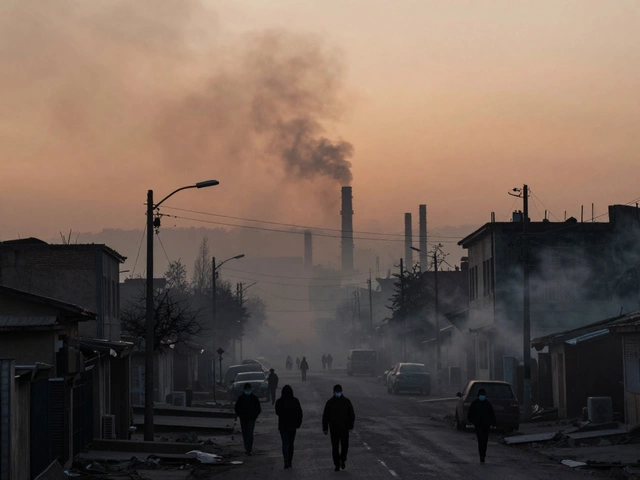
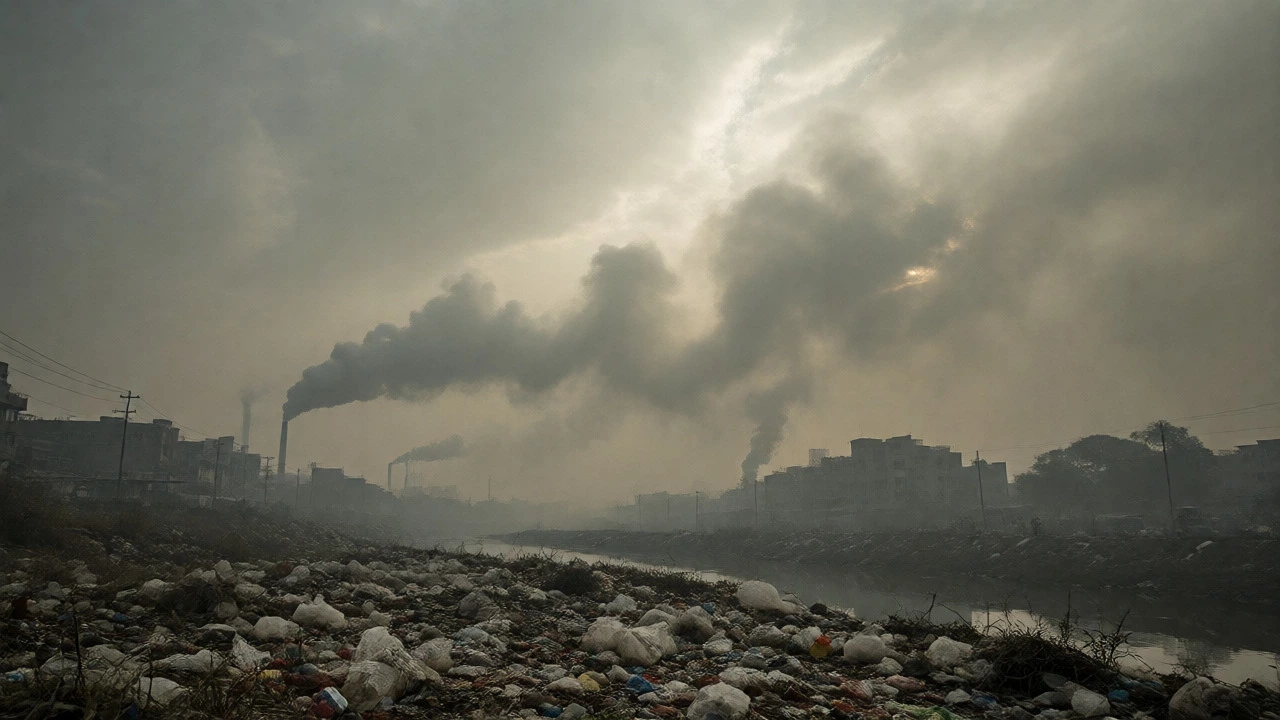
The first group is probably the one that springs to mind when you hear "environmental issue." Pollution is the introduction of harmful materials into the environment that cause adverse change. Think of it as adding something bad to a clean system. This doesn't just mean visible trash. It includes invisible chemicals in our drinking water, particulate matter in the air we breathe, and noise that disrupts wildlife communication.
We usually categorize pollution by where it happens. Air pollution comes from burning fossil fuels in cars and factories. Water pollution often results from agricultural runoff-fertilizers and pesticides washing into rivers-or industrial waste dumped directly into streams. Soil pollution occurs when heavy metals or plastics accumulate in the ground, affecting what grows there and what lives in it.
Why does this matter to you? Because pollution has direct health impacts. According to the World Health Organization, ambient air pollution kills an estimated 4.2 million people worldwide each year. That’s not a future threat; it’s happening now. When we classify this as a specific group, we realize that solutions here are often technological or regulatory. We install scrubbers on chimneys, ban certain plastics, or set limits on emissions. It’s about managing inputs and outputs to keep the environment from getting too toxic to sustain life.
Resource Depletion: Using Up What We Can’t Replace Fast Enough
If pollution is about putting bad things in, Resource Depletion is the consumption of natural resources faster than they can be replenished naturally. This is the second major group. We aren’t necessarily making the air dirty here; we’re just using up the stock. Imagine a bank account. Pollution is like spending money on junk food that makes you sick. Resource depletion is simply withdrawing cash until the account hits zero.
This category covers both renewable and non-renewable resources. Non-renewables like coal, oil, and natural gas take millions of years to form. Once they’re gone, they’re gone for human timescales. Renewables, like forests, freshwater aquifers, and fish stocks, can regenerate, but only if we don’t harvest them faster than nature can replace them. Overfishing is a classic example. We pull tons of cod from the ocean every year, but if the breeding population drops too low, the stock collapses. It doesn’t bounce back quickly.
The driver here is demand. As global populations grow and living standards rise, the appetite for energy, water, and raw materials explodes. In New Zealand, for instance, fresh water availability is becoming a critical concern in dry regions due to irrigation demands for farming. Solving resource depletion isn’t about cleaning up a mess; it’s about efficiency and substitution. We switch from petrol cars to electric ones. We use drip irrigation instead of flood watering. We recycle aluminum because melting down old cans uses 95% less energy than mining new bauxite ore. It’s a math problem: how do we meet our needs without emptying the cupboard?
Ecological Degradation: Breaking the Systems Themselves
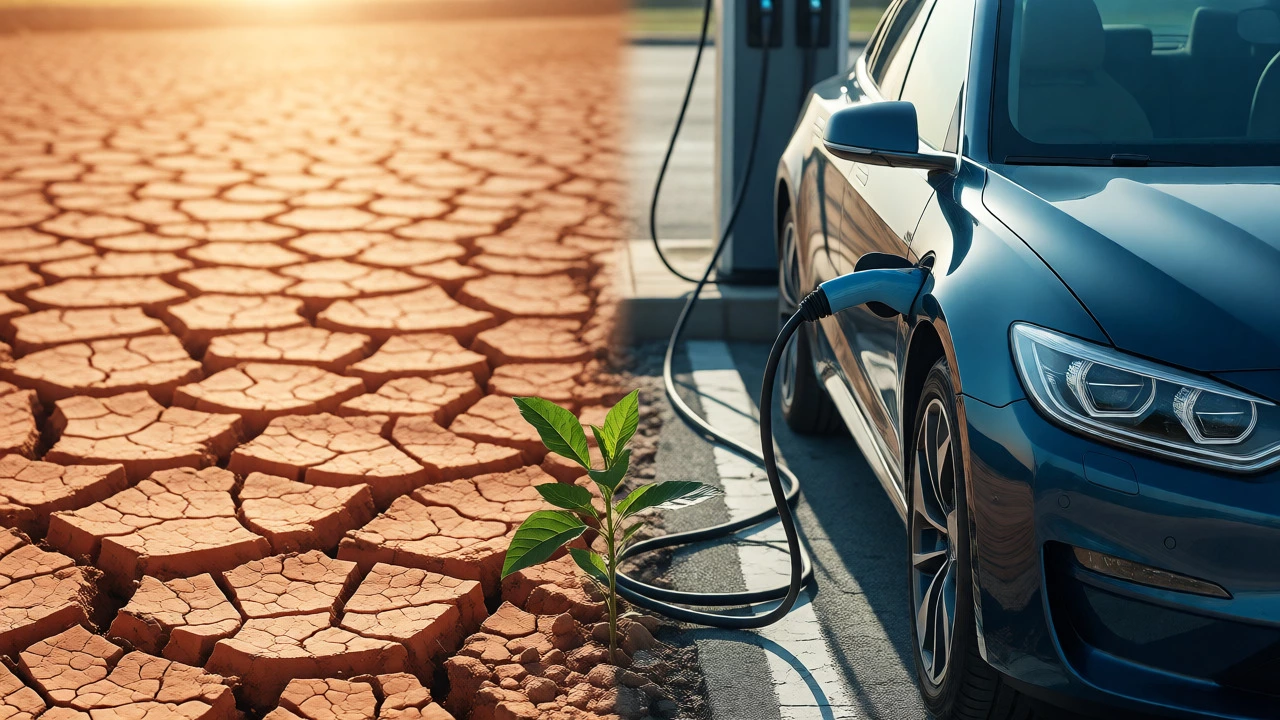
The third group is trickier because it’s systemic. Ecological Degradation refers to the deterioration of the environment through depletion of resources such as loss of species, habitat destruction, and pollution. While it overlaps with the other two, its focus is on the breakdown of complex biological systems. It’s not just about one dirty river or one empty oil well; it’s about the web of life unraveling.
Habitat destruction is the biggest culprit here. When we clear land for agriculture or urban sprawl, we fragment ecosystems. Animals lose their migration routes. Pollinators lose their flowers. Wetlands, which act as natural sponges against floods, get paved over. This leads to biodiversity loss-the extinction of plants and animals at rates hundreds of times higher than the background rate. The UN reports that around 1 million animal and plant species are now threatened with extinction, many within decades.
Climate change fits squarely into this bucket, though it also drives the other two. Rising temperatures alter habitats faster than species can adapt. Coral reefs bleach and die. Glaciers melt, changing sea levels and freshwater supplies. This group requires holistic solutions. You can’t just put a filter on a problem; you have to restore balance. This means rewilding areas, creating protected corridors for wildlife, and shifting entire economic models away from infinite growth on a finite planet. It’s the hardest group to solve because it involves understanding complex interactions between thousands of species and climate variables.
How These Groups Interact
It’s tempting to treat these three groups as separate silos, but they feed into each other constantly. Consider deforestation. It starts as resource depletion (we cut down trees for timber). It causes ecological degradation (animals lose homes, soil erodes). And it worsens pollution (fewer trees mean more CO2 in the atmosphere, contributing to air quality issues and climate change).
Here is a quick look at how they differ in terms of primary drivers and typical solutions:
| Group | Primary Issue | Key Drivers | Common Solutions |
|---|---|---|---|
| Pollution | Contamination of air, water, soil | Industrial waste, vehicle exhaust, plastics | Filtration, regulations, waste management |
| Resource Depletion | Overuse of natural assets | High consumption, inefficient energy use | Recycling, renewable energy, conservation |
| Ecological Degradation | Breakdown of ecosystems | Habitat loss, invasive species, climate change | Reforestation, protected areas, sustainable land use |
Recognizing these distinctions helps you pick the right battle. If you care about clean beaches, you’re fighting pollution. If you worry about running out of fresh water, you’re addressing resource depletion. If you want to save native birds from going extinct, you’re tackling ecological degradation. All three are vital, but they require different tools.

What Can You Actually Do?
Feeling overwhelmed is normal. The scale of these problems is huge. But individual actions do add up, especially when they align with the specific type of problem you want to address.
- For Pollution: Reduce single-use plastics. Support companies that use biodegradable packaging. Advocate for stricter emission standards in your local council meetings.
- For Resource Depletion: Cut your energy use. Switch to LED lights, insulate your home, and consider public transport or cycling. Eat locally sourced food to reduce the carbon cost of transport.
- For Ecological Degradation: Plant native species in your garden to support local pollinators. Volunteer for tree-planting days. Support organizations that buy land for conservation.
In Wellington, for example, community groups often focus on restoring wetlands. This tackles ecological degradation by bringing back habitats for eels and birds, while also helping with pollution by filtering runoff before it hits the harbor. It’s a win-win that addresses multiple groups at once.
Final Thoughts on Navigating Environmental Challenges
Environmental problems aren’t monolithic. They come in flavors: the dirty stuff we pump out, the scarce stuff we burn through, and the fragile systems we break apart. By sorting them into these three groups-pollution, resource depletion, and ecological degradation-we gain clarity. We stop seeing a vague cloud of doom and start seeing specific challenges with specific fixes.
Your role isn’t to solve all three alone. Pick the lane that resonates with you. Whether you’re picking up litter, turning off the tap, or planting a pohutukawa tree, you’re contributing to a healthier planet. The key is staying informed and acting consistently. The environment doesn’t need perfection; it needs participation.
Are climate change and pollution the same thing?
No, but they are closely linked. Climate change is primarily driven by greenhouse gas emissions, which are a form of air pollution. However, climate change also causes ecological degradation by altering habitats and weather patterns. So, while burning coal creates pollution that heats the planet, the resulting heat waves and rising seas represent broader ecological shifts beyond simple contamination.
Which environmental problem is the most urgent?
It depends on your location and perspective. For immediate health risks, air pollution in cities is often the most urgent. For long-term survival, ecological degradation and biodiversity loss may be more critical because they threaten the stability of food systems and economies. Most experts argue that climate change sits at the intersection of all three groups and acts as a threat multiplier, making it arguably the most pressing overarching challenge today.
Can technology solve all environmental problems?
Technology is powerful but not a silver bullet. It works well for pollution (e.g., electric vehicles, water filters) and resource depletion (e.g., solar panels, recycling tech). However, ecological degradation often requires behavioral and political changes, such as stopping deforestation or reducing consumption, which technology alone cannot fix. We need both innovation and lifestyle changes.
What is the difference between renewable and non-renewable resources?
Renewable resources, like sunlight, wind, and timber, can be replenished naturally over short periods. Non-renewable resources, like coal, oil, and minerals, exist in fixed amounts and take millions of years to form. Depleting non-renewables is irreversible on human timescales, whereas renewables can run out temporarily if used faster than they regenerate (like overfishing), but they can recover if managed correctly.
How does habitat destruction lead to disease spread?
When humans encroach on wild habitats (ecological degradation), we come into closer contact with wildlife. This increases the risk of zoonotic diseases jumping from animals to humans. Deforestation, for example, can bring bats or rodents carrying viruses closer to human settlements. Additionally, degraded environments often lack the biodiversity that naturally regulates pest populations, allowing disease vectors like mosquitoes to thrive.