Outreach Role Explorer
Select a role below to view detailed responsibilities, key performance indicators (KPIs), and essential skills.
Program Director
The visionary who ensures the outreach program aligns with broader organizational goals. They handle high-level strategy, funding, and partnerships.
Primary Focus
- • Budget allocation & financial health
- • Partnership agreements & MOUs
- • High-level reporting to board/stakeholders
- • Long-term strategic planning
Key Metrics
Required Skills
Outreach Manager
The tactical brain that designs campaigns, sets targets, and manages logistics. They bridge the gap between strategy and field execution.
Primary Focus
- • Campaign design & scheduling
- • Staff supervision & support
- • Real-time problem solving
- • Logistics & resource allocation
Key Metrics
Required Skills
Field Organizer
The face of the organization in the community. They interact directly with residents, listen to needs, and connect people to resources.
Primary Focus
- • Door-knocking & tabling
- • Active listening & documentation
- • Resource connection
- • Building trust at ground level
Key Metrics
Required Skills
Data Coordinator
Manages the CRM system to ensure every contact is logged, categorized, and followed up on. Turns raw activity into actionable insights.
Primary Focus
- • CRM maintenance & cleanup
- • Reporting & visualization
- • Duplicate detection
- • Tracking neighborhood responses
Key Metrics
Required Skills
Community Liaison
Embeds themselves in specific demographics or neighborhoods to build deep trust and act as cultural translators for the organization.
Primary Focus
- • Deep relationship building
- • Cultural mediation
- • Identifying informal leaders
- • Tailoring messaging for relevance
Key Metrics
Required Skills
Content Creator
Crafts flyers, social media posts, and newsletters tailored to different audiences, ensuring brand consistency and message relevance.
Primary Focus
- • Graphic design & copywriting
- • Social media management
- • Audience segmentation
- • Brand consistency
Key Metrics
Required Skills
Volunteer Coordinator
Handles recruitment, training, scheduling, and recognition for volunteers, turning free labor into a sustainable, motivated workforce.
Primary Focus
- • Recruitment & onboarding
- • Training & safety protocols
- • Scheduling & retention
- • Morale & recognition
Key Metrics
Required Skills
You’ve got the mission. You’ve got the funding. But when you send your first email or knock on the first door, things often fall apart. Why? Because nobody actually knew who was supposed to do what. Outreach roles are not just job titles; they are the functional gears that keep a community engagement program running smoothly. Without clear definitions, you end up with duplicated efforts, missed opportunities, and burned-out staff.
Think of it like a football team. If everyone tries to be the quarterback, nobody blocks. In community work, if everyone tries to "do outreach," you lose the strategic focus needed to build lasting relationships. Whether you are running a local food bank drive or a city-wide health initiative, defining specific positions ensures every interaction counts. Let’s break down exactly who needs to be on your team and what they should actually be doing.
The Core Hierarchy: Who Leads and Who Executes?
Most successful outreach programs rely on a three-tier structure. It’s simple, but skipping a level causes chaos. At the top sits the Program Director. This person doesn’t necessarily knock on doors. They handle the big picture: budget allocation, partnership agreements, and high-level reporting. They ensure the outreach aligns with the organization’s broader goals. If you’re a small nonprofit, this might be the Executive Director wearing two hats.
Beneath the director is the Outreach Manager. This is the tactical brain. They design the campaign, set weekly targets, and manage the logistics. If the Director decides why we are reaching out, the Manager decides how and when. They track metrics, adjust strategies based on real-time feedback, and solve problems before they become crises. Without this middle layer, directors get bogged down in scheduling conflicts, and field teams lack direction.
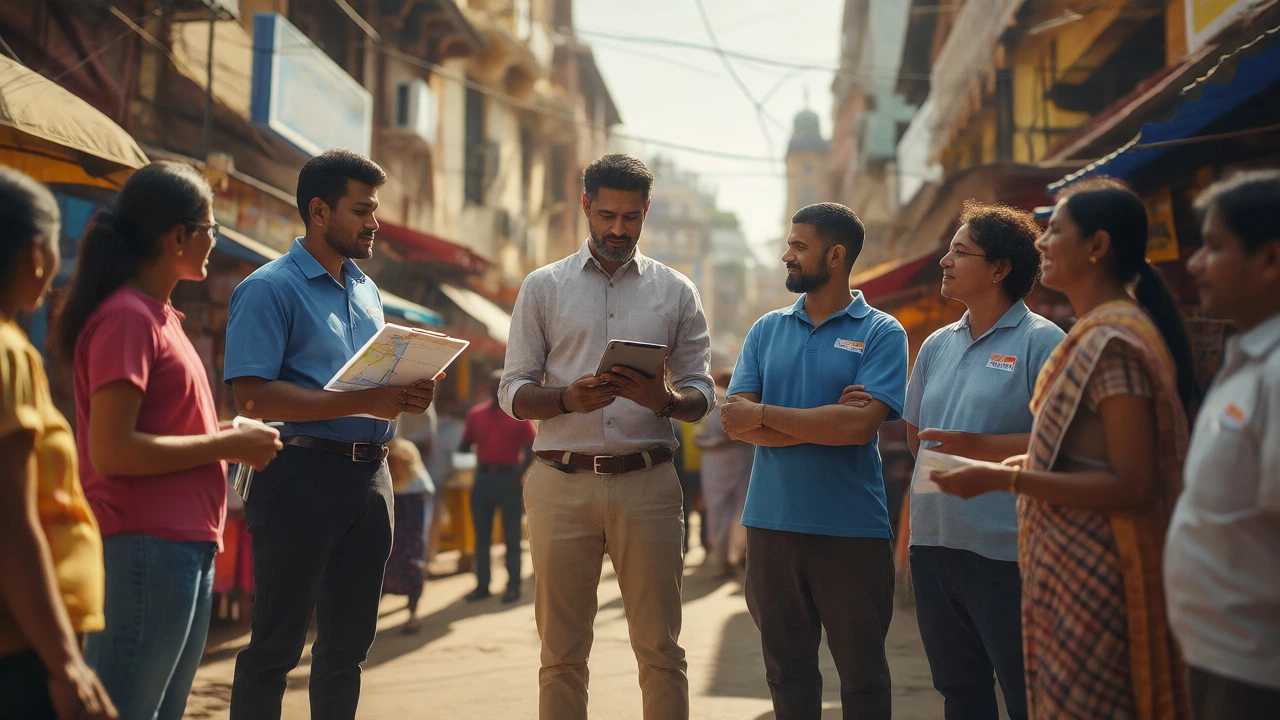
Finally, you have the Field Organizers and Volunteers. These are the face of your organization. They interact directly with the community. Their role isn’t just to talk; it’s to listen, document, and connect people to resources. Confusion often arises here because managers sometimes try to do fieldwork themselves, neglecting their oversight duties. Keep these lanes distinct. The Manager supports the Field Organizer; they don’t replace them.
Specialized Functions: Beyond the Generalist
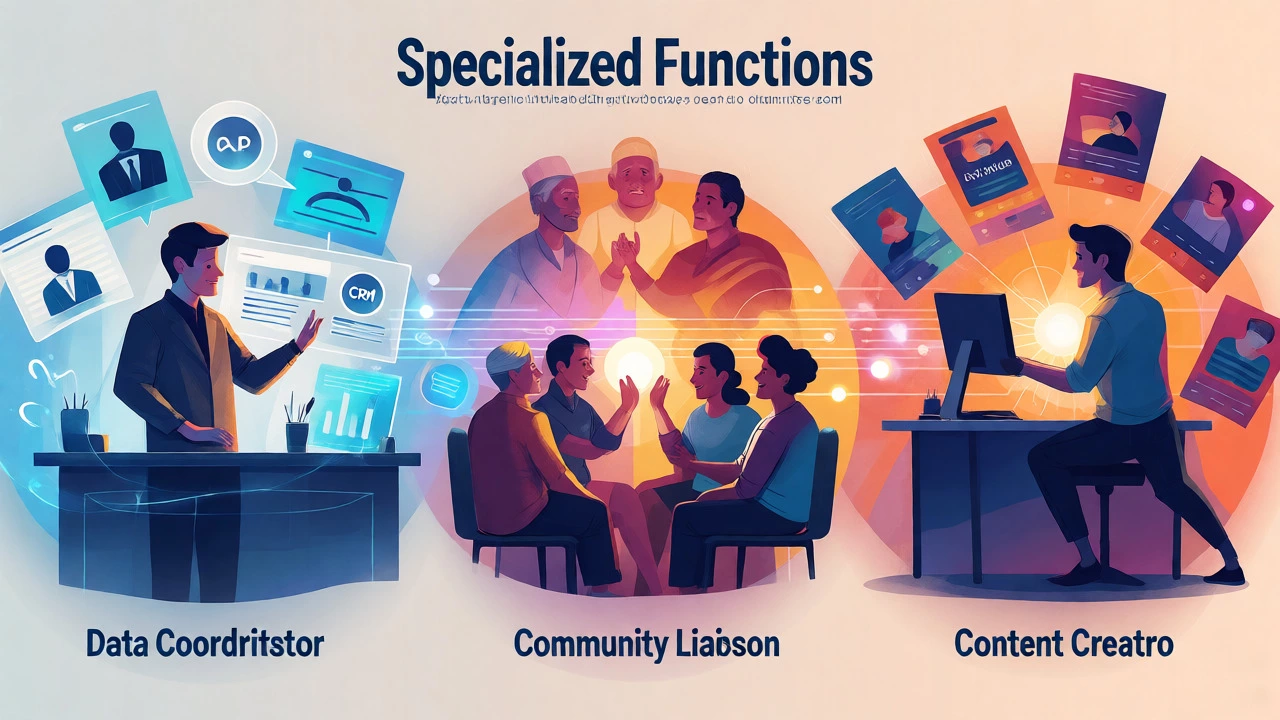
Generalists are great, but specialized roles elevate your impact. One critical position is the Data Coordinator. In 2026, intuition isn’t enough. You need hard numbers. This role manages your CRM (Customer Relationship Management) system, ensuring every contact is logged, categorized, and followed up on. They clean data duplicates and generate reports that show which neighborhoods are responding best. If you skip this role, you’ll likely lose track of potential partners or repeat conversations with the same residents, frustrating both parties.
Another vital player is the Community Liaison. Unlike field organizers who may rotate through different areas, liaisons embed themselves in specific demographics or neighborhoods. For example, if you’re working with immigrant communities, a liaison fluent in the relevant languages and cultural norms builds trust faster than an outsider. They act as cultural translators, helping your organization avoid tone-deaf messaging. They also identify informal leaders-people who aren’t elected officials but hold sway in their circles.
Don’t overlook the Content Creator. Modern outreach happens online as much as offline. This person crafts flyers, social media posts, and email newsletters tailored to different audiences. A flyer for university students looks very different from one for retirees. The Content Creator ensures consistency in branding while adapting the message for relevance. They work closely with the Data Coordinator to see which messages drive the most clicks or sign-ups.
Volunteer Management: The Unsung Hero Role
If your model relies on volunteers, you absolutely need a Volunteer Coordinator. Treating volunteers as free labor without proper management is a recipe for high turnover. This role handles recruitment, training, scheduling, and recognition. They create onboarding packets so new volunteers understand safety protocols and conversation guidelines. More importantly, they provide feedback loops. When a volunteer feels heard and valued, they stay longer and perform better.
In Wellington, where community networks are tight-knit, word-of-mouth matters. A well-managed volunteer becomes an ambassador. They invite friends, share events, and vouch for your credibility. The Volunteer Coordinator nurtures this network. They organize regular check-ins-not just for logistics, but for morale. Burnout is real in outreach. This role spots the signs early and adjusts workloads accordingly.
Comparing Key Outreach Roles
To help you visualize how these positions differ, consider this breakdown. Note that skills vary significantly between strategic and operational roles.
| Role | Primary Focus | Key Metrics | Required Skills |
|---|---|---|---|
| Program Director | Strategy & Funding | Budget adherence, Partnership growth | Leadership, Grant writing, Networking |
| Outreach Manager | Tactics & Logistics | Campaign ROI, Staff productivity | Project management, Analysis, Problem-solving |
| Field Organizer | Direct Engagement | Contacts made, Events attended | Communication, Empathy, Resilience |
| Data Coordinator | Information Integrity | Data accuracy, Report timeliness | CRM proficiency, Attention to detail |
| Volunteer Coordinator | Human Resources | Retention rates, Hours contributed | Recruitment, Training, Motivation |
Common Pitfalls in Role Definition
The biggest mistake organizations make is expecting one person to wear too many hats. I’ve seen Outreach Managers trying to manage volunteers, write grants, and knock on doors simultaneously. Result? They fail at all three. The grant application is rushed, the volunteers feel neglected, and the door-knocking lacks follow-up. If you have limited staff, prioritize hiring a part-time Data Coordinator or Volunteer Coordinator over adding another generalist.
Another trap is vague job descriptions. Saying "help with outreach" means nothing. Be specific. Does this person call leads? Do they attend meetings? Do they update spreadsheets? Ambiguity leads to finger-pointing when things go wrong. Clear expectations reduce stress and increase accountability.
Also, beware of siloed communication. The Data Coordinator must talk to the Field Organizers daily. If the data says one area is unresponsive, but organizers say otherwise, there’s a disconnect. Regular stand-up meetings-short, focused, and frequent-keep everyone aligned. Use shared digital tools so updates happen in real-time, not via weekly emails that arrive too late to act on.

Building Your Team Structure
Start small. You don’t need five full-time hires to begin. Here’s a practical roadmap for scaling your roles:
- Stage 1 (Startup): One Program Director doubling as Manager, plus two dedicated Field Organizers. Handle data manually in a shared spreadsheet until volume justifies software.
- Stage 2 (Growth): Hire a Volunteer Coordinator if you have more than ten active volunteers. Bring on a part-time Data Coordinator to implement a basic CRM.
- Stage 3 (Scale): Separate the Director and Manager roles. Add a Content Creator to amplify reach. Consider specialized Liaisons for key demographic groups.
Remember, roles evolve. As your community outreach matures, you might find you need a "Partnerships Specialist" to handle corporate sponsors, or a "Digital Engagement Lead" to manage online communities. Flexibility is key. Review your team structure quarterly. Ask each member: "Is this still the best use of your time?" If the answer is no, adjust the scope.
Why Clarity Matters for Impact
When roles are clear, trust grows. Community members notice when you follow up promptly because someone owns that task. Partners appreciate consistent messaging because the Content Creator and Manager are aligned. Donors see organized operations and feel confident their money is well-spent.
Ultimately, defining outreach roles isn’t about bureaucracy. It’s about respect. Respect for your team’s time, respect for the community’s attention, and respect for your mission’s potential. Get the structure right, and the results will follow naturally.
Do small nonprofits really need separate roles?
Yes, even in tiny teams. You can combine roles, but you must define responsibilities clearly. For instance, one person might be the "Manager/Volunteer Coordinator," but they need protected time for both tasks. Blurring lines completely leads to burnout and inefficiency.
What is the difference between a Field Organizer and a Volunteer?
A Field Organizer is typically a paid staff member responsible for strategy execution and complex interactions. Volunteers support the Organizer by handling simpler tasks like distribution or greeting. The Organizer trains and supervises volunteers.
How does a Data Coordinator improve outreach?
They prevent lost leads and duplicate efforts. By tracking interactions accurately, they help the team target resources effectively. They turn raw activity into actionable insights, showing which tactics work best.
Should the Program Director engage in fieldwork?
Occasionally, yes, for visibility and relationship building. However, they should not rely on it for daily operations. Their primary value lies in securing resources and setting strategy, not counting contacts.
What tools help define roles better?
Shared project management boards (like Trello or Asana) clarify who owns which task. CRMs assign ownership of contacts. Regular team charters outline decision-making authority for each role.