Greenwashing Detector
Check if a Company's Environmental Claims Are Genuine
Use this tool to evaluate if a company's environmental claims are legitimate or just greenwashing. Based on criteria from the article about identifying trustworthy environmental groups.
When you hear the word environmental group, you might picture people holding signs, planting trees, or standing in front of bulldozers. But what exactly is an environmental group? It’s not just a club for nature lovers. It’s a structured effort by people who want to protect the natural world - and they’re doing it in ways that actually change laws, businesses, and communities.
What an Environmental Group Actually Does
An environmental group is an organized team - usually nonprofit - that works to protect nature, reduce pollution, and fight climate change. These groups don’t just talk about problems. They take action. That could mean suing polluters, lobbying for cleaner air laws, teaching kids about recycling, or cleaning up rivers. Some work locally. A group in Wellington might focus on saving native birds from rats and possums. Another in a coastal town might fight plastic waste washing up on beaches. Others operate globally, like Greenpeace or the World Wildlife Fund, pushing big companies and governments to cut carbon emissions. They don’t all look the same. Some are tiny, run by volunteers in basements. Others have offices, scientists, lawyers, and budgets in the millions. But they all share one goal: to make sure the planet stays livable for people, animals, and plants.How They’re Different From Other Charities
You might think an environmental group is just another charity. But they’re not the same as food banks or homeless shelters. Those groups help people right now. Environmental groups help people - and future generations - by fixing the systems that harm the Earth. A food bank gives a meal today. An environmental group might work to stop a factory from dumping toxins into a river that supplies drinking water for 100,000 people. That’s long-term protection, not just emergency help. They also work differently. Instead of asking for donations to feed someone, they ask for support to change a law, stop a mine, or protect a forest. Their success isn’t measured in meals served, but in acres preserved, emissions reduced, or species saved.Types of Environmental Groups
Not all environmental groups do the same thing. Here are the main types you’ll find:- Conservation groups - Focus on protecting animals, forests, wetlands, and oceans. Examples: The Nature Conservancy, Forest & Bird (New Zealand).
- Climate action groups - Push for renewable energy, carbon reduction, and climate justice. Examples: 350.org, Extinction Rebellion.
- Anti-pollution groups - Target plastic waste, toxic chemicals, air pollution, and industrial runoff. Examples: Ocean Conservancy, Zero Waste NZ.
- Indigenous-led environmental groups - Led by Māori, First Nations, or other native communities defending land and water rights. Examples: Te Whakatōhea Climate Collective, Standing Rock Sioux Tribe.
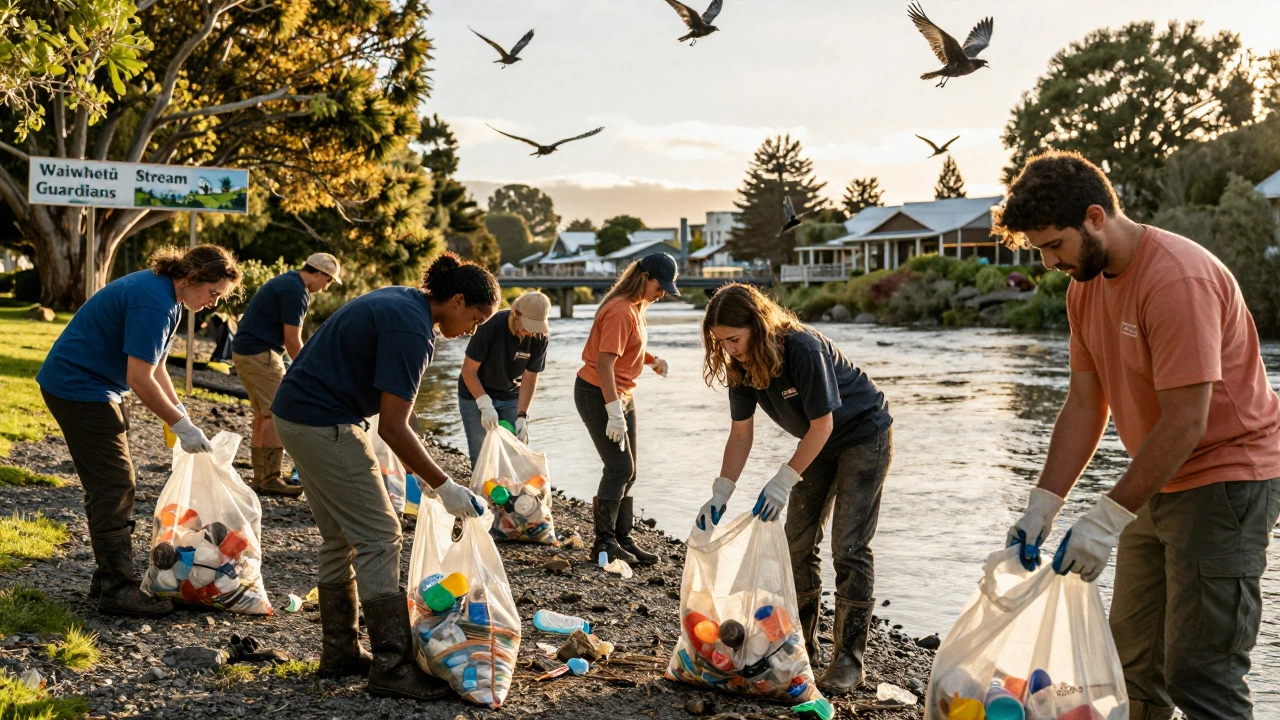
- Community-based groups - Local volunteers cleaning rivers, planting trees, or stopping urban sprawl. These are often the most powerful because they know their land best.
Some groups combine these roles. A single group might fight to save a forest, protect the birds living there, and stop a road from being built through it - all at once.

How They Get Their Power
You might wonder: how do a few hundred people change big companies or governments? The answer is simple: they make noise, and they make it count. They use science. Environmental groups hire biologists, chemists, and climate scientists to prove pollution is happening. They don’t just say, “This is bad.” They show water samples, satellite images, or data on bird population drops. They use the law. Many groups have legal teams. When a company breaks environmental rules, they take them to court. In New Zealand, groups like Environmental Defence Society have successfully blocked developments that would damage sensitive habitats. They use public pressure. Protests, petitions, social media campaigns - these aren’t just for show. When thousands of people demand action, politicians listen. In 2023, a coalition of New Zealand environmental groups helped push the government to ban new offshore oil and gas exploration. They use education. Schools, workshops, documentaries - these change minds. When kids learn why bees matter, or how recycling plastic saves energy, they grow up caring. That’s how movements grow.What They’ve Actually Achieved
People think environmental groups are just dreamers. But look at what they’ve done:- In 1970, the first Earth Day was organized by activists. Today, over 190 countries celebrate it.
- Groups in New Zealand helped ban single-use plastic bags in 2019. Over 1 billion bags were removed from circulation in the first year.
- Environmental lawyers in Canada stopped a major oil pipeline after proving it threatened salmon rivers and Indigenous lands.
- Global campaigns led to the 2016 Paris Climate Agreement - signed by 196 countries.
- Local groups in Wellington saved the Hutt River from being channelized by showing how it supported native fish and flood protection.
These aren’t small wins. They’re system changes. And they happened because people organized.
How You Can Tell If a Group Is Legit
Not every group calling itself “environmental” is doing good work. Some are front groups for corporations. Others are poorly run. Here’s how to spot the real ones:- They publish reports - Look for data, maps, or studies on their website. Real groups don’t just post photos of trees.
- They’re transparent about money - Legit groups show where donations go. If you can’t find their financial statements, be cautious.
- They work with scientists - Real groups partner with universities or government agencies. If their only “expert” is a guy with a YouTube channel, question it.
- They’ve won real cases - Search their name + “court case” or “policy win.” If they’ve changed a law or stopped a project, they’re effective.
- They listen to local communities - Especially Indigenous groups. If they speak for others without including them, they’re not truly environmental - they’re performative.
In New Zealand, Forest & Bird and Greenpeace Aotearoa are well-known for transparency and real results. Local groups like the Waiwhetū Stream Guardians are also trusted because they’re rooted in the community.
Why It Matters If You Know What They Are
Understanding what an environmental group is helps you decide where to put your time or money. You don’t have to join one. But if you care about clean water, fresh air, or wildlife, you should know who’s fighting for it - and who’s just selling stickers. It also helps you spot greenwashing. Companies say they’re “eco-friendly” all the time. But if they’re not backing it up with real environmental groups, they’re lying. And if you want to make a difference? You don’t need to be a scientist. You can volunteer for a local clean-up. You can sign a petition. You can ask your council why they’re not supporting a bike path. These small actions add up - and they’re exactly what environmental groups need to grow.Environmental groups aren’t perfect. They argue with each other. They sometimes miss the mark. But without them, we’d have more polluted rivers, more extinct species, and less hope for a livable future.
They’re not just a group. They’re a movement. And that movement is still growing.
Are environmental groups only for activists?
No. Environmental groups need everyone - teachers, engineers, parents, retirees, students. You don’t need to protest to help. You can donate, share their posts, write to your local representative, or join a beach clean-up. Most members aren’t activists. They’re just people who care.
Do environmental groups care about people too?
Yes. Environmental issues hit people hardest - especially low-income communities and Indigenous groups. Polluted air, contaminated water, and extreme heat don’t affect everyone equally. Many environmental groups focus on environmental justice - making sure protection isn’t just for wealthy neighborhoods. Groups like Te Whakatōhea Climate Collective work to protect both land and the people who depend on it.
Can one person really make a difference with an environmental group?
Absolutely. Many big groups started with one person. The first Earth Day had just 20 million participants - now it’s global. Local clean-ups, tree planting, or even just telling your friends about a threat to a river can spark a movement. You don’t need to be loud. You just need to show up.
How do I find a trustworthy environmental group near me?
Start with your local council’s environmental page - they often list community groups. Search for groups with clear goals, like “saving the Hutt River” or “protecting native forests.” Check their website for annual reports, photos of real work, and contact info. Avoid groups that only sell merch or have no clear track record. In New Zealand, Forest & Bird and local iwi-led groups are reliable starting points.
Do environmental groups get government funding?
Some do, but not all. In New Zealand, groups like Forest & Bird get small grants from the Department of Conservation for specific projects. But most rely on donations and volunteers. Government funding doesn’t mean they’re controlled by the government - it just means they’ve proven their work is valuable. Many groups refuse public money to stay independent and critical of policy.