Community Engagement Method Selector
Select your current project goal to find the best method for your community outreach strategy.
Recommended Method: -
💡 Pro Tip for Implementation:
Select a goal to see a tailored implementation tip based on the community engagement steps.
Please select an objective from the list to see the recommended engagement method and its characteristics.
Quick Takeaways for Effective Outreach
- Preparation is 40% of the work; don't rush into the field without a map.
- Listen more than you speak to build trust with skeptical residents.
- Transparency about what can actually be changed prevents frustration.
- Closing the loop-telling people how their input changed the outcome-is the only way to keep them engaged.
Step 1: Planning and Asset Mapping
Before you send a single email or post a flyer, you need to know who you're talking to. You can't treat a corporate district the same way you treat a residential suburb. This phase is about creating a roadmap. If you jump straight to a town hall meeting without a plan, you'll likely only hear from the loudest voices-usually the people who are already unhappy.
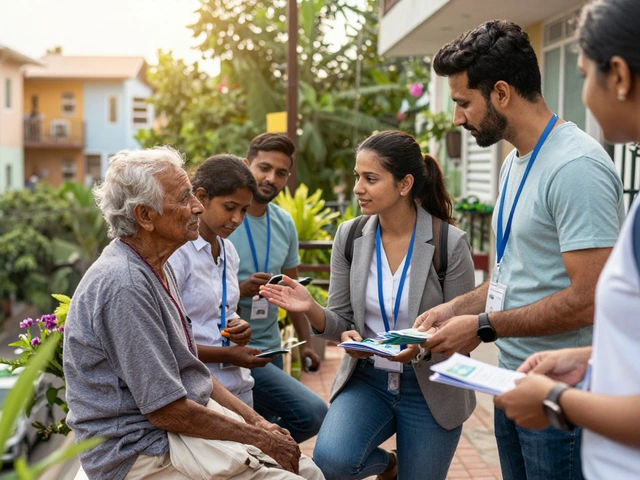
Start by performing an asset map. This means identifying the strengths already present in the community. Who are the trusted leaders? Is there a local church, a popular coffee shop, or a neighborhood Facebook group that everyone trusts? In a real-world scenario, if you're trying to implement a new recycling program in a city like Wellington, you wouldn't just post on a government website. You'd find the local 'green' champions and the community garden organizers first. These are your bridges.
Define your goals clearly. Are you just informing people (one-way communication), consulting them (asking for feedback), or collaborating (making decisions together)? Using the IAP2 Spectrum of Public Participation helps here. It provides a framework to tell the community exactly how much influence they have. If you tell people they are "collaborating" but you've already signed the contract with a vendor, you've just created an enemy for life.
Step 2: Designing the Outreach Strategy
Now that you know the "who" and "why," you need to decide on the "how." A common mistake is relying on a single method, like a 6 PM Tuesday meeting. Who can actually make it to that? Not parents with toddlers, not people working night shifts, and certainly not teenagers.
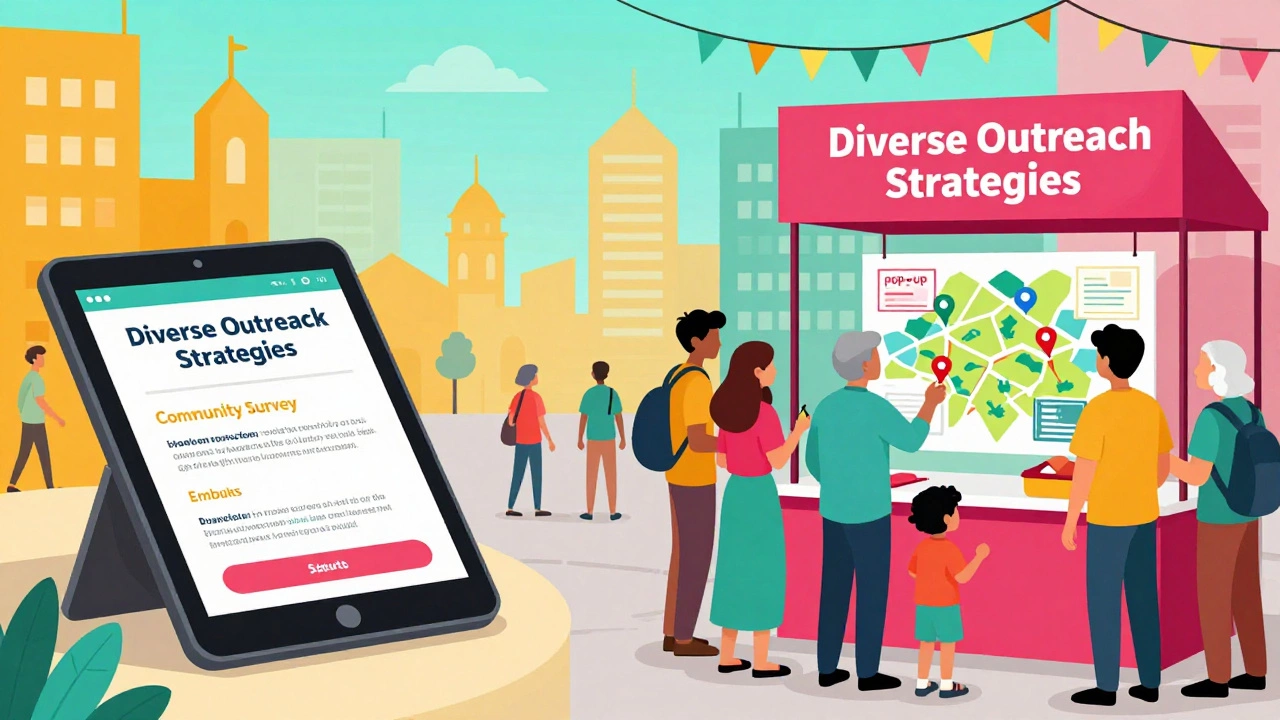
Your strategy should be a mix of digital and physical touchpoints. Think about Stakeholder Engagement as a menu of options. You might use online surveys for the broad data, but follow those up with "pop-up" engagement stations at a local market. Instead of asking people to come to you, go to where they already are. If you're targeting youth, don't hold a meeting in a library; go to the skate park or a local gaming cafe.
| Method | Reach | Depth of Feedback | Best For |
|---|---|---|---|
| Online Surveys | High | Low | Quantitative data/trends |
| Focus Groups | Low | High | Nuanced opinions/problem solving |
| Town Hall Meetings | Medium | Medium | Public transparency/debate |
| One-on-One Interviews | Very Low | Very High | Building trust with key leaders |
Step 3: Active Implementation and Listening
This is where the rubber meets the road. Implementation isn't just about executing the plan; it's about active listening. There is a massive difference between hearing and listening. Hearing is recording the words; listening is understanding the emotion and the "why" behind the complaint.
When you're in the field, use open-ended questions. Instead of asking, "Do you like this plan?" (which invites a simple yes/no), ask, "How would this change affect your daily walk to the store?" This forces the participant to visualize the impact and provide specific, concrete feedback. If someone gets angry-and they will-don't get defensive. Acknowledge the frustration. Often, people just want to feel seen and heard by the powers that be.
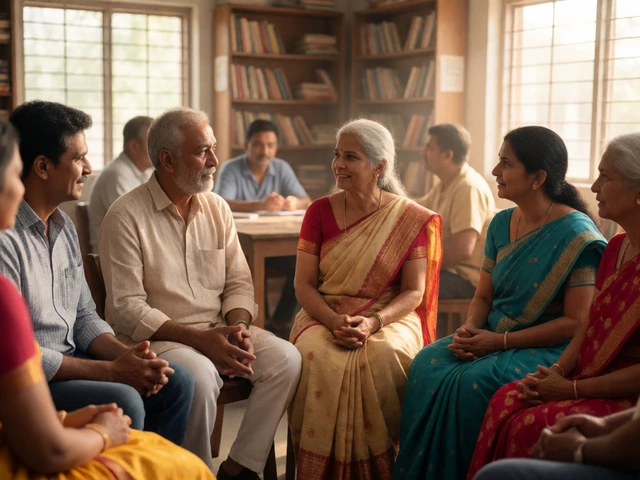
During this phase, you're gathering Qualitative Data. This isn't just numbers on a spreadsheet; it's the story of a grandmother who can't get her wheelchair over a specific curb or a business owner worried about parking. These specific details are more valuable than any general survey result because they give you a clear list of things to fix.
Step 4: Analysis and Integration
You've collected a mountain of feedback. Now what? The biggest failure in community outreach is the "black hole" effect-where a community gives input and then never hears about it again. This destroys trust and makes people less likely to participate in the next project.
Analysis involves grouping feedback into themes. You might find that while 200 people complained about the color of the benches, 50 people raised a critical point about safety lighting that you completely missed. You have to weigh the volume of complaints against the impact of the issues. Use a decision matrix to determine what is feasible. Can you change the lighting? Yes. Can you move the entire park three blocks north? No.
Integration means actually changing the design. If the community pointed out a flaw and you fixed it, make a big deal out of it. When you present the updated plan, don't just say "we've made improvements." Say, "Based on the feedback from the residents of the East Side, we've added three more streetlights and widened the pedestrian crossing." This proves that the engagement process was real and not just a checkbox exercise.
Step 5: Closing the Loop and Reporting
The final step is the one most people skip. Closing the loop is the act of reporting back to the community to tell them exactly what happened with their input. This is where you move from a project-based interaction to a long-term relationship.
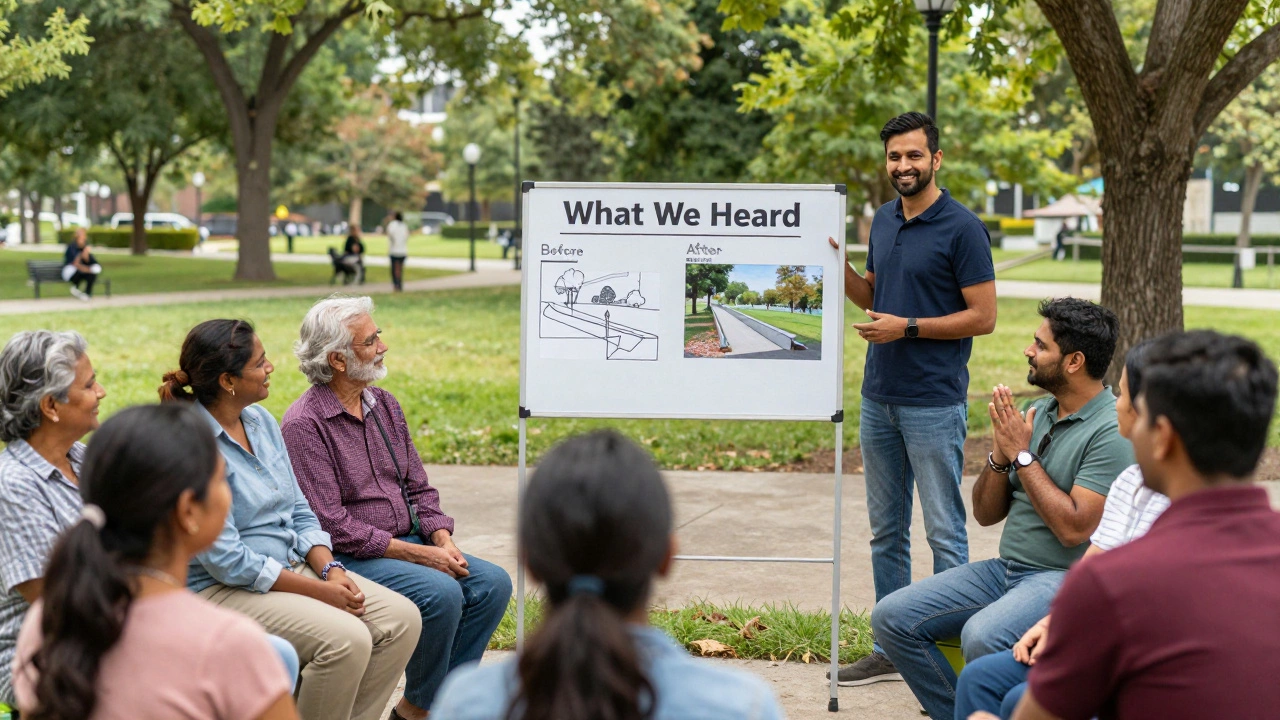
Create a "What We Heard" report. This should be a simple, jargon-free document that lists the main points of feedback and the corresponding action taken. If you couldn't implement a suggestion, explain why. People are generally reasonable if you give them a logical explanation (e.g., "We couldn't add a parking lot here because of underground water mains"). Being honest about constraints is better than ignoring the request.
End the process with a thank-you. Whether it's a public shout-out on social media or a small community gathering, acknowledge the time people gave you. This builds Social Capital, which makes the next project significantly easier because the community now trusts that you are a listener, not just a talker.
What happens if the community is completely divided on an issue?
This is common. The goal isn't always total consensus, which is often impossible, but "informed consent." Use a facilitated workshop where both sides can present their case. Focus the conversation on shared goals-like safety or accessibility-rather than the point of contention. When you make the final decision, explain the trade-offs clearly so both sides understand the logic, even if they don't like the result.
How do I deal with "NIMBY" (Not In My Backyard) attitudes?
NIMBYism usually stems from fear of loss-loss of property value, peace, or parking. Address the fear directly with data. Instead of saying "it won't be a problem," show them a case study of a similar project in another neighborhood that didn't cause those issues. Involve the most vocal critics in the design process; once they have a hand in shaping the project, they often move from being opponents to being protectors of the result.
How long should the engagement process actually take?
It depends on the project scale, but for a medium-sized local project, allow 3 to 6 months. Rushing it leads to resentment. A typical timeline involves one month of mapping/planning, two months of active outreach and listening, and one month for analysis and reporting back. If you're dealing with high-conflict issues, double that timeline to allow trust to build.
Can I do community engagement entirely online?
You can, but you shouldn't. Digital-only engagement creates a "participation gap," excluding seniors, low-income residents without reliable internet, and those who aren't tech-savvy. To get a representative sample of your community, you must use a hybrid approach. Use digital tools for speed and volume, but use face-to-face interactions for depth and inclusivity.
What is the most common mistake in these five steps?
Skipping Step 5. Many organizations feel that once the project is approved, the engagement is over. However, failing to close the loop makes the community feel exploited. The "thank you" and the "here is what we did with your ideas" phase is what ensures people will show up for you the next time you need their help.
Next Steps for Project Leads
If you're just starting, don't try to do everything at once. Pick one small part of your project and test your outreach method. Try a "micro-engagement"-like a 10-minute chat with a local business owner-to see if your assumptions about the community are correct before launching a full-scale survey. If you're halfway through and realize you've missed a key group of people, stop and go back to Step 1. It's better to delay the project by a month than to launch a project that the community will actively fight against for years.