
Social Club Matcher
Find your perfect 'Third Place' based on the psychology of connection.
Step 1: What is your primary goal?
Your Ideal Match:
Quick Takeaways
- Social clubs combat the "loneliness epidemic" by providing structured social interaction.
- They offer "third place" environments-spaces that aren't home or work.
- Niche interests create faster, deeper bonds than general socializing.
- Membership provides a sense of identity and curated social status.
The Search for the Third Place
Most of our lives are split between the first place (home) and the second place (work). For decades, we've been losing the Third Place is a social environment separate from the two primary locations of home and work, essential for community vitality . When the local pub becomes too noisy or the coffee shop becomes a coworking office, where do you go to just be with people? Social clubs fill this void. They offer a neutral ground where the only requirement for entry is a shared interest.
Think about the effort it takes to organize a dinner party. You have to coordinate calendars, host, and hope the conversation flows. In a club, the structure is already there. You show up at 7 PM on a Tuesday, and the social infrastructure is waiting for you. This removes the "social friction" that often stops people from making new friends as adults.
Fighting the Loneliness Epidemic
It sounds dramatic, but we are living through a documented crisis of isolation. The Loneliness Epidemic is a public health phenomenon characterized by a widespread lack of meaningful social connection, linked to increased mortality and mental health issues isn't just about being alone; it's about lacking meaningful connection. Scrolling through a feed doesn't trigger the same oxytocin release as a shared laugh over a failed sourdough starter or a heated debate about a board game rule.
Clubs provide something called "low-stakes consistency." You see the same faces every week. You don't have to perform a perfect version of yourself because the shared activity-whether it's hiking, book discussions, or wine tasting-acts as a buffer. The focus is on the hobby, which ironically makes the emotional connection easier to build. You aren't just "meeting a stranger"; you're collaborating on a project.
The Power of Niche Interests
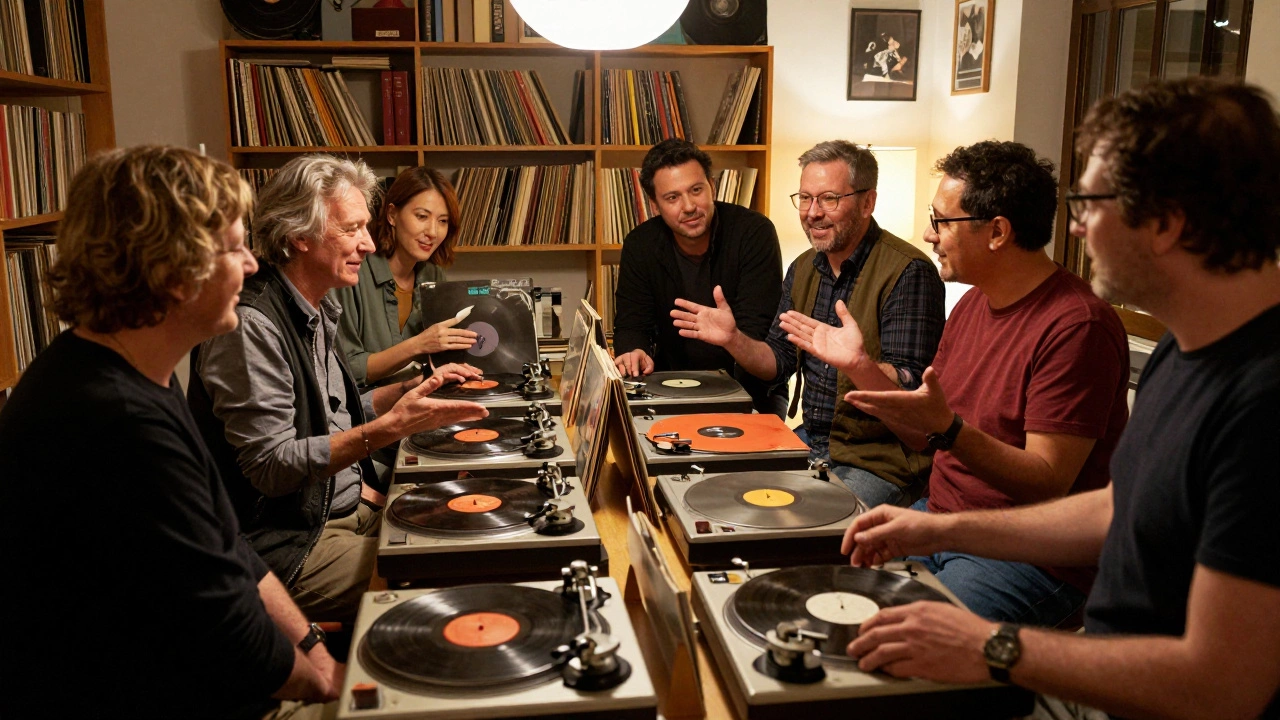
General socializing can be exhausting. "Small talk" is the enemy of deep connection. This is where niche clubs excel. When you join a club dedicated to something specific-like Vinyl Records is analog sound storage formats that foster collector cultures and specialized social circles or urban sketching-you skip the weather conversation and dive straight into a passion.
| Feature | General Socializing (Bars/Parties) | Niche Social Clubs |
|---|---|---|
| Entry Barrier | Low (anyone can enter) | Medium (shared interest/membership) |
| Conversation Depth | Surface-level / Small talk | Deep / Subject-specific |
| Relationship Speed | Slow (takes many random meets) | Fast (shared passion creates instant bond) |
| Consistency | Sporadic | Scheduled / Recurring |
This "interest-first" approach acts as a filter. You know that everyone in the room already values at least one thing that you do. It creates an immediate sense of psychological safety. You aren't wondering if you're "too much" or "too weird" because, in a niche club, "too much" is usually the gold standard for membership.
Status, Identity, and the Ego
We can't pretend that it's all about friendship. There's a significant element of Social Capital is the networks of relationships among people who live and work in a particular society, enabling access to resources and status involved. For some, joining a prestigious social club is about the badge of honor. It signals that you've "made it" or that you belong to an elite circle of thinkers, artists, or entrepreneurs.
Even in non-elite clubs, there is a hierarchy of expertise. Becoming the "go-to person" for a specific piece of knowledge within a group provides a powerful sense of purpose. When you're the one who knows exactly which soil mix works best for orchids, you aren't just a member; you're a valued asset to the community. This validates our identity in a way that a corporate job title often fails to do.

The Professional Pivot: Networking Without the Cringe
Traditional networking events are often awkward. They feel transactional-like you're trading business cards for favors. Social clubs offer a "backdoor" to Professional Networking is the process of interacting with others to exchange information and develop professional contacts . When you build a genuine friendship over a shared love of jazz or cycling, the professional opportunities follow naturally.
It's the difference between asking for a job and having a friend who says, "Hey, my company is hiring, and I know you'd be great." The trust is already established through the club's activities. This organic growth of a professional circle is far more sustainable and authentic than the cold-calling approach of LinkedIn.
Designing Your Own Social Circle
If you're feeling the void, the best way to start isn't by looking for "friends," but by looking for "activities." The goal is to find a group that offers a combination of shared passion and a regular schedule. If you have to plan every single meeting, the group will likely fizzle out within three months.
Look for groups that have a clear set of rules or a mission statement. Whether it's a strict adherence to a specific gaming system or a commitment to meeting every first Saturday of the month, structure is the glue that keeps a social club from becoming just another group chat that eventually goes silent.
Aren't social clubs just for wealthy people?
While "exclusive members' clubs" are often associated with wealth, the concept of a social club is universal. From free community-run book clubs and sports leagues to hobbyist groups in libraries, most social clubs are accessible to anyone with a shared interest. The value comes from the connection, not the membership fee.
How do I find a club that actually fits my personality?
Start by listing three things you genuinely enjoy doing alone. Then, search for local groups centered on those specific activities. It's better to find a small group of people who love the same obscure 1970s cinema than a large group of people you have nothing in common with. Look for "low-stakes" introductory meetings before committing to a long-term membership.
Can online clubs replace physical social clubs?
Online communities are great for information exchange, but they lack the "embodied presence" of physical clubs. Non-verbal cues, shared physical space, and the collective energy of a room are essential for deep emotional bonding. While a Discord server is a great supplement, it rarely replaces the psychological benefit of a physical Third Place.
What if I'm too introverted for a social club?
Ironically, activity-based clubs are often the best place for introverts. Because there is a primary task (like painting, gaming, or gardening), the pressure to maintain constant eye contact or fill every silence with talk is removed. You can engage with the activity and the people at your own pace, using the hobby as a social bridge.
Why do some social clubs fail while others last for decades?
The most successful clubs have a balance of strong leadership and a clear identity. They have a predictable rhythm-same time, same place-which allows members to integrate the club into their lifestyle. Clubs that rely on a single "super-organizer" often collapse when that person leaves; those with a shared sense of ownership among members tend to survive.
Getting Started
If you're ready to step out of the digital bubble, start small. You don't need to commit to a lifelong membership on day one. Try a "drop-in" session at a local hobby group or a community center. The key is to prioritize consistency over intensity. Seeing someone once a month for a year is often more valuable for building a friendship than seeing them every day for a week and then never again.
The goal isn't just to "network" or "have a hobby." It's to reclaim a part of the human experience that we've outsourced to our phones. Find your people, find your place, and let the activity do the heavy lifting of the introduction.