Philanthropy Impact Simulator
Compare how different giving strategies affect the speed and nature of charitable impact. Select a donor model to see the simulated outcome.
Select a model and amount above to analyze the distribution strategy.
- The Giving Pledge has shifted how billionaires approach wealth transfer.
- Bill Gates and Warren Buffett remain the heavyweights in total volume.
- MacKenzie Scott is redefining speed and trust in grant-making.
- Charitable trusts provide tax advantages while managing long-term payouts.
The Heavyweights of Modern Philanthropy
When people ask who gives the most, Bill Gates is usually the first name mentioned. Through the Bill & Melinda Gates Foundation, he has poured tens of billions into global health and education. This isn't just a hobby; it's a massive operation that functions like a government agency, targeting things like polio eradication and sanitation in developing nations. Then you have Warren Buffett. His approach is different. Instead of running a massive internal bureaucracy, he spends the bulk of his fortune by funding other foundations. He famously pledged the vast majority of his wealth to the Gates Foundation and a few other family-led charities. By doing this, he avoids the overhead of running his own giant trust and lets the experts handle the distribution. But if we talk about billionaire philanthropy in terms of momentum, we have to talk about MacKenzie Scott. She doesn't follow the old-school model of creating a massive endowment that spends 5% a year. Instead, she uses a "no-strings-attached" approach, giving away billions in quick, unrestricted grants to small nonprofits. While her total lifetime giving might not yet eclipse the decades-long lead of Gates, her pace is unprecedented.Understanding the Charitable Trust
To understand why these numbers are so high, you have to understand the tool they use: the charitable trust. A charitable trust is a legal entity that holds assets for the benefit of a charity or the public. It's not just about being nice; it's a strategic financial move. There are two main types that billionaires use. A charitable lead trust (CLT) sends money to a charity for a set time, and then the remaining assets go back to the donor's heirs. A charitable remainder trust (CRT) does the opposite-it pays the donor first, and the remainder goes to the charity. This allows the wealthy to reduce their estate taxes while still controlling how their money is spent over several generations. Why does this matter for the "who gives most" debate? Because a billionaire might announce a $10 billion gift, but that money stays in the trust and is paid out over 20 years. The "gift" is a promise, but the actual cash flow is a slow drip.| Donor | Primary Vehicle | Giving Strategy | Key Focus Area |
|---|---|---|---|
| Bill Gates | Private Foundation | Targeted, Data-Driven | Global Health & Vaccine Equity |
| Warren Buffett | Donor-Advised Funds | Outsourced Distribution | General Philanthropic Support |
| MacKenzie Scott | Direct Grants | Rapid-Fire, Unrestricted | Social Justice & Community Orgs |
The Giving Pledge and the Psychology of Wealth
In 2010, Gates and Buffett started The Giving Pledge. This is a moral commitment, not a legal contract, where billionaires promise to give away the majority of their wealth. It changed the conversation from "how much can I keep" to "how much can I give away before I die." This movement has pulled in names like Elon Musk and Mark Zuckerberg. For example, Mark Zuckerberg and Priscilla Chan created the Chan Zuckerberg Initiative (CZI). Interestingly, CZI isn't a traditional non-profit; it's an LLC. This allows them to make charitable donations, but also make private investments in companies that align with their goals and even engage in political lobbying. It's a hybrid model that shows how the definition of "giving" is expanding.
The Controversy: Impact vs. Influence
Is giving the most actually the best thing? Some critics argue that when a single person controls billions in a private foundation, they have too much power over public policy. If one billionaire decides that a specific type of schooling is the only way to fix education, they can fund that approach globally, potentially drowning out other valid methods. There's also the issue of "philanthro-capitalism." This is when billionaires apply business principles to charity. While it can make a foundation more efficient, it can also ignore the root causes of poverty in favor of a "quick fix" that looks good on a spreadsheet. For instance, focusing on the number of vaccines delivered is a clear metric, but changing a country's entire healthcare system is a messy, slow process that doesn't always fit into a quarterly report.How to Measure "Most"
If you want to determine who the most generous billionaire is, you have to choose your metric. Are we measuring:- Total Amount Pledged: This includes money that hasn't been spent yet but is promised.
- Annual Payout: How much cash actually left the trust and entered a non-profit's bank account this year?
- Percentage of Net Worth: Giving $1 billion is impressive, but it's different if you have $2 billion versus $100 billion.
The Future of Big Giving
We are seeing a move toward "Trust-Based Philanthropy." The old way was to make a charity fill out a 50-page application and report back every month on how they spent every penny. The new way, pioneered by people like Scott, is to give the money and trust the people on the ground to know where it's needed most. As more billionaires enter the ranks, the use of Donor-Advised Funds (DAFs) is skyrocketing. These allow a person to get an immediate tax break but decide where the money goes later. This has led to some criticism that wealth is being "parked" in tax-free accounts without actually helping anyone in the short term.Does the Giving Pledge legally force billionaires to give?
No. The Giving Pledge is a moral commitment, not a legally binding contract. There are no penalties if a signatory decides not to give the amount they promised.
What is the difference between a foundation and a charitable trust?
A foundation is generally a separate legal entity with its own board and staff that manages grants. A charitable trust is more of a financial arrangement that dictates how assets are held and distributed to charities over time.
Why do billionaires use LLCs for giving?
An LLC gives the donor more flexibility. They can invest in for-profit companies that have a social mission and participate in political advocacy, which is strictly limited for traditional 501(c)(3) non-profits.
Who is currently giving the most in terms of speed?
MacKenzie Scott is widely recognized for the speed and volume of her giving, often distributing billions of dollars in unrestricted grants much faster than traditional foundations.
Are these donations just for tax breaks?
Tax advantages are a significant part of the strategy. By donating to a trust or foundation, billionaires can significantly reduce their income and estate taxes, though the funds must eventually be used for charitable purposes.
What's Next?
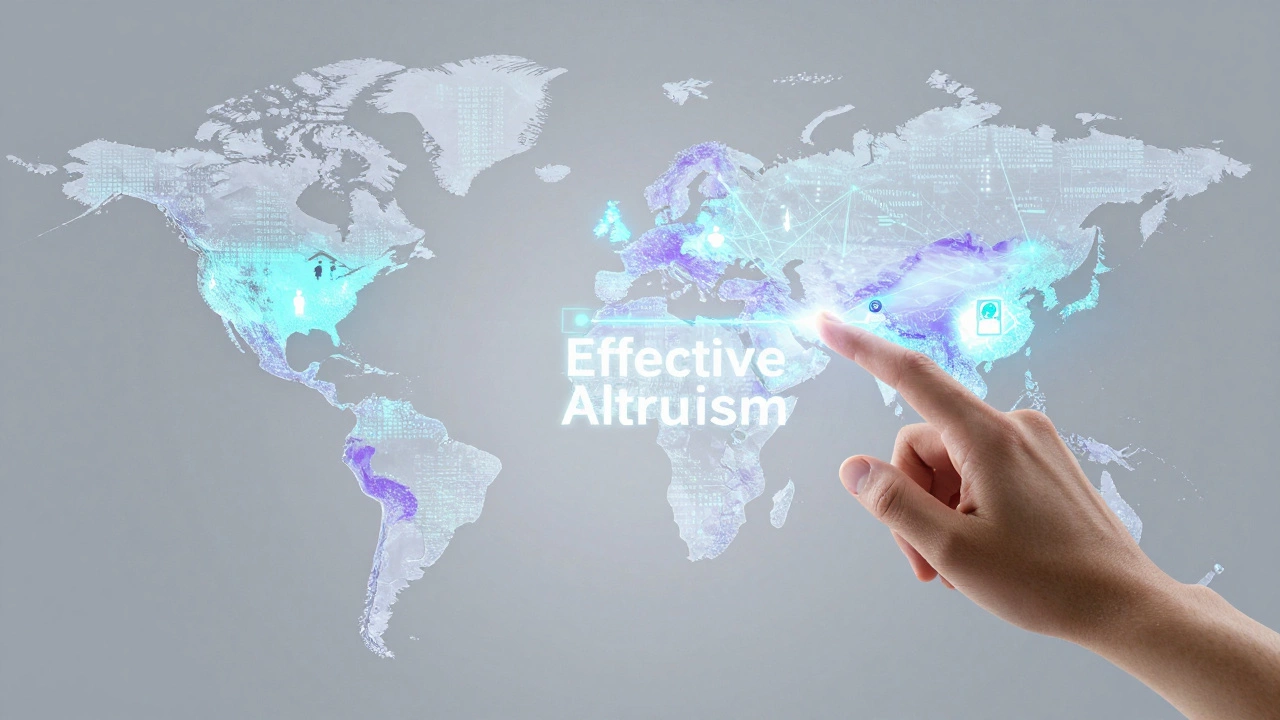
If you're interested in how this money affects the real world, look into the "Effective Altruism" movement. It's a philosophy that tries to use evidence and reasoning to determine the most efficient way to benefit others. Whether it's fighting malaria or preventing existential risks from AI, it's the mindset that many of today's billionaire donors are adopting to ensure their billions actually make a difference.