Food Resource Calculator
Calculate Your Meals
Enter the food items you have to see how many meals you can prepare with basic ingredients.
Your Meal Plan
How to Prepare
Enter your food items above to see your personalized meal plan.
Important Note: This tool shows how to stretch food resources. Always check expiration dates and food safety guidelines. Food banks never give expired food—items are distributed before expiration.
When you have no food and no money, the fear isn’t just about hunger-it’s about not knowing where your next meal will come from. You’re not alone. Millions of people face this every day, and there are real, working solutions that don’t require credit cards or a bank account. The truth? You can eat today, even if you have nothing.
Food banks are your best first stop
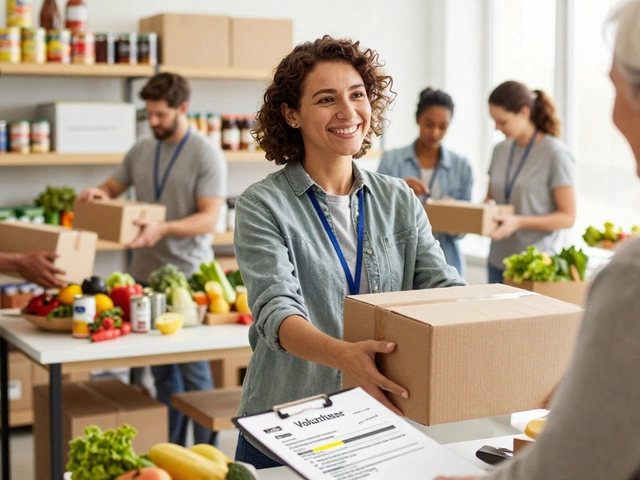
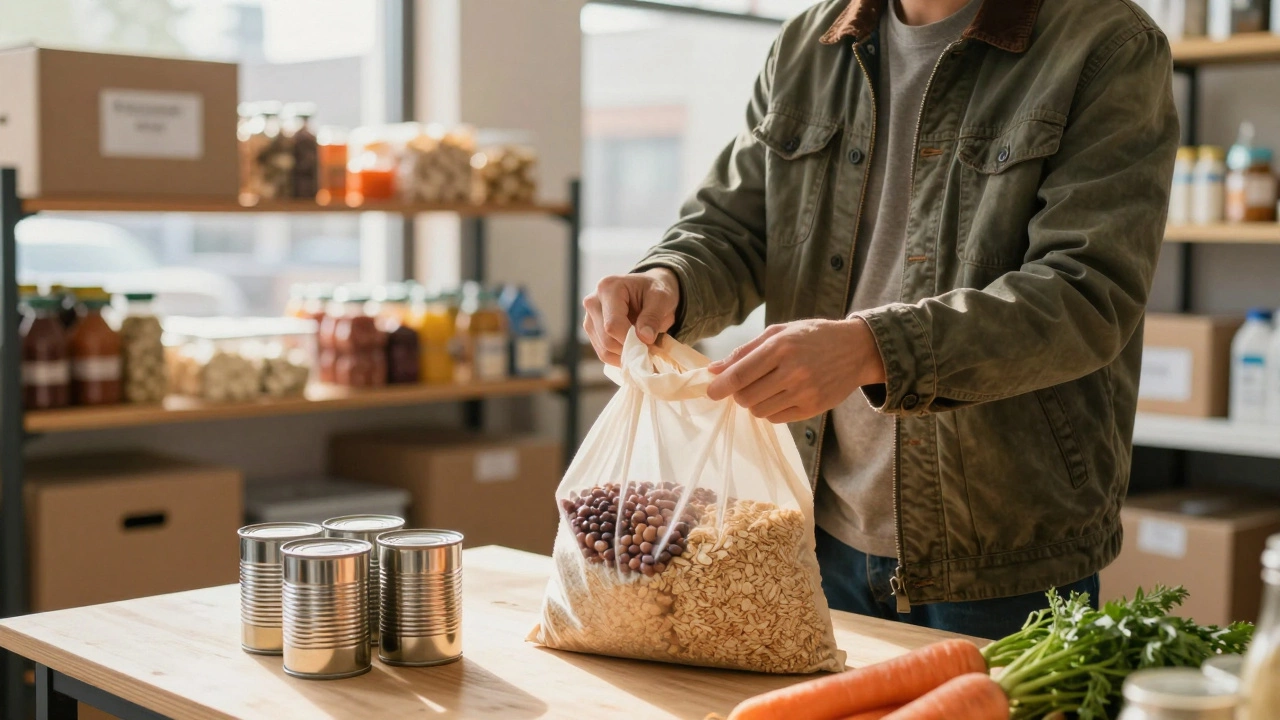
Food banks aren’t just for holidays or emergencies-they’re open year-round, and they don’t ask for ID, proof of income, or a reason why you’re there. In most cities, food banks hand out groceries once a week, sometimes more. What you get varies: canned beans, rice, pasta, peanut butter, cereal, canned vegetables, fruit, and sometimes fresh eggs or bread. Some even have free produce stands with apples, potatoes, or onions. These aren’t luxury items-they’re calories you can count on.
One woman in Cleveland told a local reporter she got a full grocery bag every Thursday: two boxes of oatmeal, three cans of tuna, a jar of peanut butter, and a bag of carrots. She fed her two kids for four days. That’s not charity-it’s survival.
Use food pantries at churches and community centers
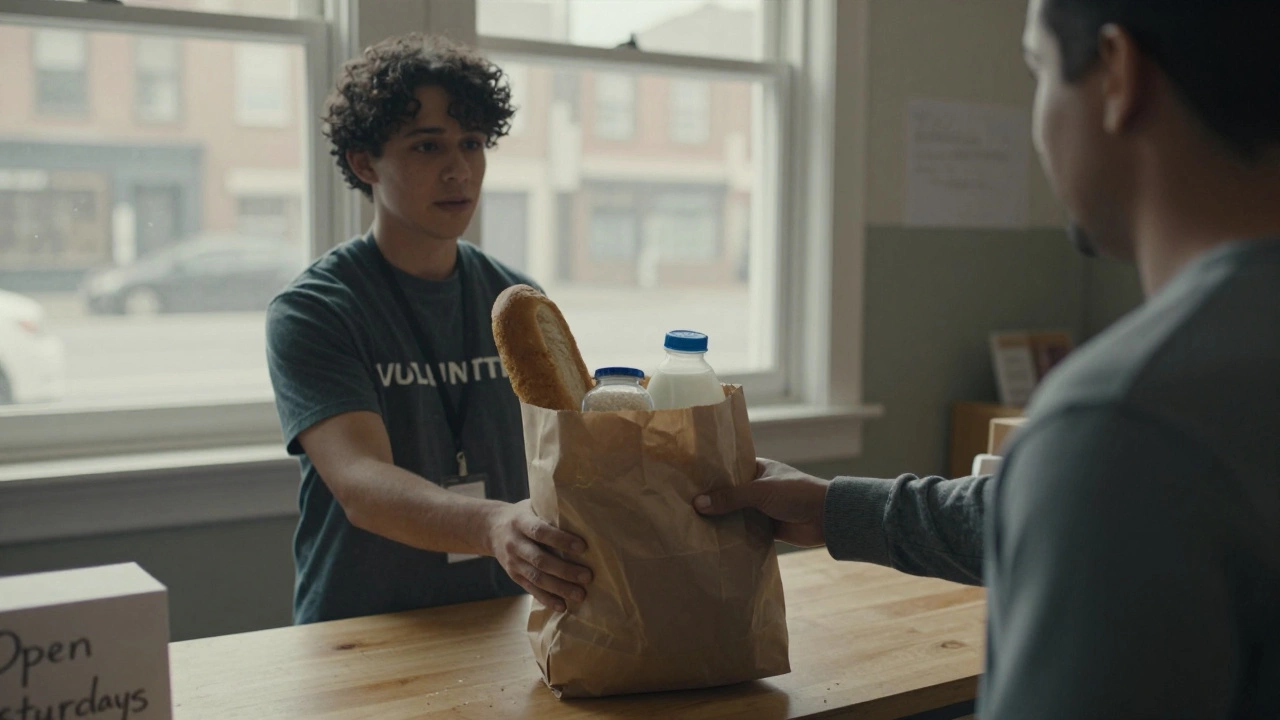
Many churches, mosques, synagogues, and community centers run food pantries on weekends or evenings. They often have more flexibility than government-run food banks. Some serve hot meals on Fridays. Others let you pick up a bag without waiting in line. You don’t need to attend services. You don’t need to pray. You just show up.
In Detroit, a Baptist church gives out bags every Saturday morning. Inside: a loaf of bread, a carton of milk, a bag of rice, and a can of soup. It’s not fancy, but it’s enough to keep someone from going to bed hungry. These places often know who’s struggling-volunteers see the same faces every week. They don’t judge. They just hand you the food.
Hot meals are free at soup kitchens
Soup kitchens serve hot, cooked meals every day. They’re usually open for lunch, sometimes dinner too. You don’t need to wait in line for hours. Some run on a first-come, first-served basis. Others have set hours: 11 a.m. to 1 p.m., for example. You get a plate-sometimes a sandwich, sometimes a bowl of stew or chili with bread. A few even serve fruit or a small dessert.
A man in Chicago said he ate at the same soup kitchen every day for six months. He got a turkey sandwich, mashed potatoes, and an apple. "It kept me going," he said. "I didn’t have to think about food. I just ate."
What you can cook with zero money
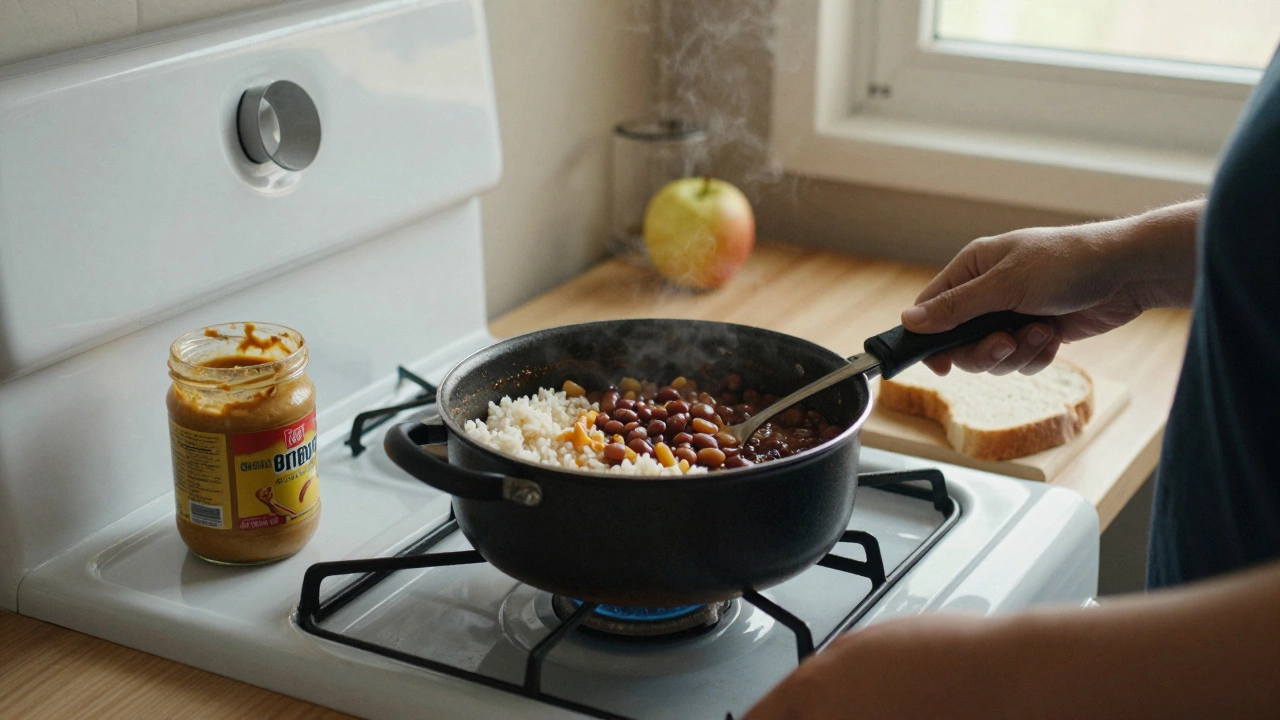
If you get a few basic items from a food bank, you can stretch them into meals that last. Here’s what works:
- Rice + beans: Cook rice and canned beans together. Add salt and pepper. That’s a full meal with protein and carbs.
- Peanut butter + bread: A sandwich with peanut butter gives you calories, fat, and protein. Add a banana if you get one.
- Oatmeal: Boil water, add oats, and a pinch of salt. Eat it plain. It fills you up for hours.
- Instant noodles: If you get a pack, cook it with just water. Skip the flavor packet. Add a spoon of peanut butter or a handful of spinach if you have it.
- Vegetable scraps: Save onion skins, carrot tops, and celery ends. Boil them in water for 20 minutes. Strain it. You’ve made broth. Add noodles or rice. It’s soup.
One person in Portland said she made three meals from one bag of rice and two cans of beans: rice and beans for lunch, rice and beans with a boiled egg (if she got one) for dinner, and leftover rice fried in a pan the next morning. No oil? Use a non-stick pan. You don’t need much.
Government programs are still there
SNAP (Supplemental Nutrition Assistance Program) is available even if you’re homeless. You can apply online, over the phone, or in person at a local social services office. You don’t need a home address. You can use a shelter, a library, or a friend’s address. Benefits are loaded onto a card you can use at grocery stores to buy food. It’s not instant-it takes 30 days max-but once approved, it lasts for months.
WIC (Women, Infants, and Children) helps pregnant women, new moms, and kids under five. It gives vouchers for milk, eggs, cheese, cereal, beans, and fruit. You don’t need to be poor to qualify-just meet income guidelines, which are very low.
What NOT to do
Don’t waste money on energy drinks or candy bars. They don’t fill you up. Don’t skip meals hoping to "save" food-you’ll get hungrier and weaker. Don’t believe the myth that food banks only give out expired food. By law, they can’t distribute anything past its sell-by date. Most items are donated before they expire.
And don’t feel ashamed. People from all walks of life use food banks: single parents, seniors on fixed incomes, workers who lost hours, veterans, students. Hunger doesn’t care about your job title.
How to find help near you
Search "food bank near me" on Google. Or call 211-a free, nationwide hotline. Operators connect you to food, housing, and health services. No judgment. No questions. Just help. In 2025, over 80% of food banks in the U.S. reported serving more people than ever before. They’re ready. You just need to ask.
What to carry with you
- A reusable bag or backpack
- A water bottle
- A small notebook and pen (to write down hours and locations)
- A photo ID if you have one (not always required, but helpful)
Some places give you a bag of groceries. Others hand you a meal on a tray. Either way, you walk away with food. That’s the win.
Can I get food if I’m not homeless?
Yes. Food banks serve anyone who needs help, whether you’re between jobs, a student, a senior on a fixed income, or a parent who can’t afford groceries after rent. You don’t have to be homeless to qualify. Most places don’t ask why you’re there.
Do food banks give out fresh food?
Yes. Many food banks now partner with local farms and grocery stores to get fresh produce, dairy, and meat. You might get apples, carrots, milk, or even chicken. It’s not guaranteed every time, but it’s becoming more common. Ask when you arrive.
Can I get food for my kids?
Absolutely. Many food banks have special bags for families with children. Some even offer kid-friendly snacks like fruit cups, granola bars, or cheese sticks. WIC programs specifically help feed babies and young kids. Bring them along-you’re not turning anyone away.
What if I can’t walk to a food bank?
Many food banks offer delivery for people with mobility issues, disabilities, or chronic illness. Call ahead and ask. Some partner with local transit agencies or volunteer drivers. If you’re too sick or tired to go, someone will come to you.
Is it better to go early or late?
Go early. Food banks often run out of certain items-especially fresh produce, eggs, or meat-by mid-afternoon. If you go at 9 a.m., you’re more likely to get a full bag. If you go at 4 p.m., you might get the leftovers. But even leftovers can feed you for a day.
Food isn’t a privilege. It’s a basic human need. And there are people, organizations, and systems ready to help you meet that need-even if you have nothing. You just have to reach out.