Charity Event Goal & Impact Planner
Event Analysis Results
Strategic Balance Score:
Key Takeaways
- Fundraising is a primary goal, but not the only one.
- Awareness converts strangers into supporters.
- Donor retention is cheaper and more effective than finding new donors.
- Community building creates a sustainable base for long-term projects.
- Clear KPIs (Key Performance Indicators) prevent event failure.
The Financial Engine: Raising Capital for Change
Let's be real: without money, most non-profits can't operate. The most obvious objective of a charity event is to generate revenue. But there is a difference between a one-time donation and a sustainable funding stream. A smart event doesn't just ask for a check; it creates a pipeline.
When you set a financial goal, you aren't just picking a number out of thin air. You are calculating the cost of a specific outcome. For example, if a non-profit organization wants to build three new wells in a drought-stricken region, they don't just say "we need money." They say, "each well costs $5,000, so our objective is $15,000." This makes the goal concrete for the donor.
There are different ways to hit these targets. Some events rely on ticket sales, while others focus on silent auctions or corporate sponsorships. The key is to diversify. If your event relies solely on a few wealthy donors, you're at risk. If you spread the goal across 500 small donations, you've built a broader base of support.
Beyond the Wallet: Raising Awareness and Education
Ever gone to an event and wondered, "Why does this actually matter?" If you did, the event failed its awareness objective. Public awareness is the process of educating the community about a specific social, environmental, or medical issue. The goal here isn't money-it's mindshare.
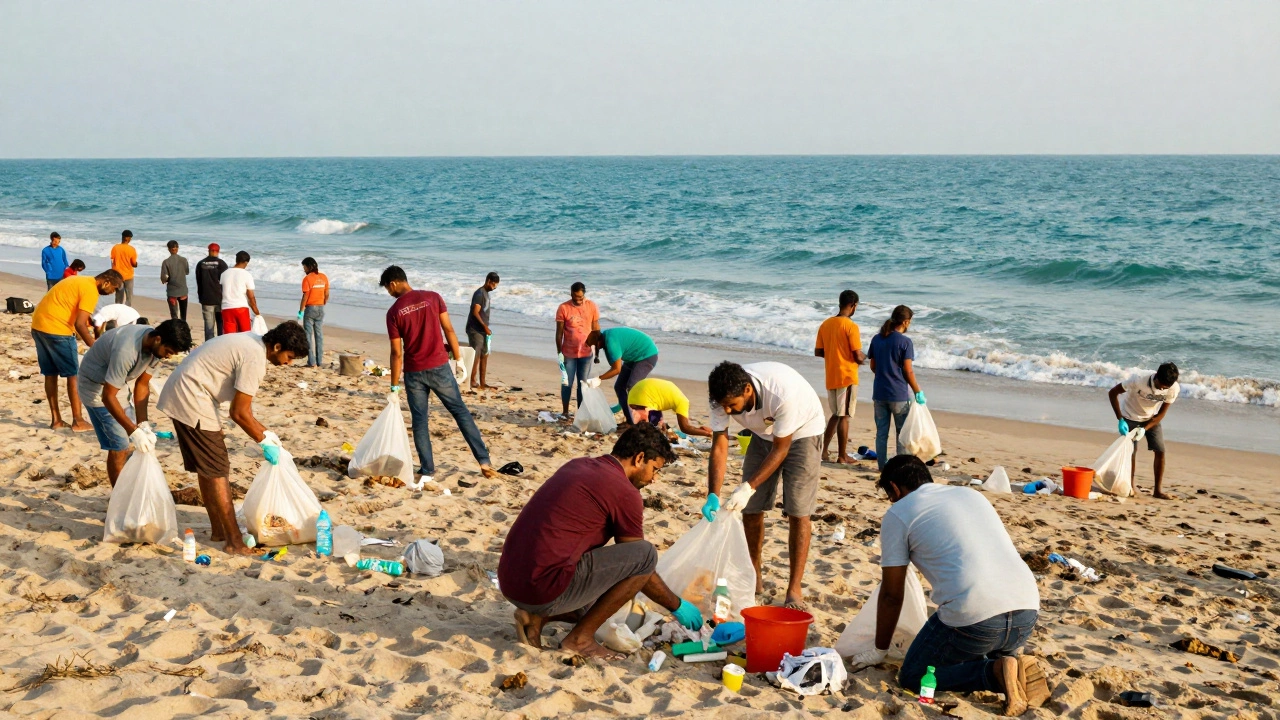
Imagine a charity focused on Ocean Conservation. A gala is great, but a beach cleanup event combined with a seminar on plastic pollution does something a check can't: it changes behavior. When people see the amount of trash on a local shore, they don't just donate; they stop using single-use plastics. That is a permanent victory.
To measure awareness, look at things like social media mentions, the number of new newsletter sign-ups, or the amount of local press coverage. If 200 people attended your event and 50 of them signed a petition to change a local law, you've achieved a strategic win that transcends the balance sheet.
The Human Connection: Donor Engagement and Retention
It costs significantly more to acquire a new donor than it does to keep an existing one. This is where Donor Engagement comes in. The objective here is to move a person from being a "transactional giver" (someone who gives once) to a "relational giver" (someone who feels part of the mission).
An event is the perfect place to show donors where their money goes. Instead of a boring PowerPoint, bring in a beneficiary of the program to tell their story. When a donor sees the direct impact of their contribution-like a student who received a scholarship-the emotional bond is sealed. This is known as the "warm glow" effect in behavioral economics, and it's the secret sauce for long-term loyalty.
| Feature | Transactional Goal | Relational Goal |
|---|---|---|
| Primary Metric | Total amount raised today | Number of recurring monthly donors |
| Donor Interaction | Brief, focused on the gift | Deep, focused on the shared mission |
| Long-term Value | Low (one-time spike) | High (steady, predictable income) |
| Event Feel | Like a sales pitch | Like a community gathering |
Building a Community Network
Charity events serve as a hub for Community Outreach. Often, the objective is to bring together people who would never otherwise meet but share a common interest in a cause. This creates a powerful network of influence.
Think about the synergy that happens when a local business owner, a city council member, and a passionate student all sit at the same table. The event provides the venue for a partnership to form. Maybe the business owner offers a matching grant, and the council member helps streamline permits for a new shelter. The event was the catalyst for a systemic solution.
This is why "networking" isn't a dirty word in the non-profit world. When you build a community, you aren't just gathering funds; you're gathering talent, expertise, and political will. The objective is to turn a crowd into a coalition.
Recruiting the Next Wave: Volunteer Acquisition
Not everyone has $1,000 to donate, but almost everyone has a few hours of time. A major objective of many events is Volunteer Recruitment. If you can get someone to spend a Saturday helping at an event, they are far more likely to become a lifelong advocate for the cause.
The trick is to make the volunteering experience rewarding. If volunteers feel like they are just moving chairs, they won't come back. But if they are tasked with guiding guests through an exhibit or sharing a success story, they feel ownership of the mission. You are effectively "onboarding" them into your organization's culture.
For a charity, a database of 100 reliable volunteers is often more valuable than a one-time $10,000 donation. Volunteers provide the labor that reduces overhead costs, meaning more of the donated money goes directly to the actual cause.
Measuring Success: The KPI Checklist
How do you know if you actually hit your objectives? You can't just say "it felt like a success." You need Key Performance Indicators (KPIs). Depending on your primary goal, your metrics will change.
If your goal was fundraising, look at your Cost to Raise a Dollar (CRD). If you spent $5,000 to make $6,000, you didn't really win. A healthy event should have a high return on investment (ROI).
If your goal was awareness, track your Reach. How many new eyes saw your message? Did you get a mention in the city newspaper? Did your website traffic spike during the event week?
If your goal was engagement, track Conversion Rates. How many people who attended the event signed up for a recurring monthly donation? How many first-time donors became repeat donors within six months?
Event Objective Checklist
- Is there a concrete financial target tied to a specific project?
- Is there a clear "Call to Action" (CTA) beyond donating money?
- Do we have a way to capture the contact info of every attendee?
- Is there a storytelling element that explains the "Why" of the cause?
- Have we defined what "success" looks like for non-financial goals?
Common Pitfalls to Avoid
One of the biggest mistakes organizations make is trying to do everything at once. If you try to raise $1 million, recruit 500 volunteers, and change a national law all in one night, you'll likely fail at all three. The most successful events pick one primary objective and two secondary ones.
Another trap is the "Luxury Gap." This happens when a charity spends so much on a fancy venue and expensive catering that the donors start wondering why the money isn't going to the cause. If your objective is to help the homeless, but your event feels like a million-dollar party, you create a cognitive dissonance that can actually drive donors away.
Finally, avoid the "Post-Event Silence." The objective of an event isn't just the night of the party; it's the relationship that follows. If you don't send a thank-you note with the specific amount raised and what that money will achieve within 48 hours, you've wasted the emotional momentum of the evening.
Can a charity event be successful if it doesn't make a profit?
Yes. If the primary objective was awareness or community building, an event can be a huge success even if it breaks even. For example, an educational workshop that leads to a massive increase in volunteers or a change in local policy provides long-term value that outweighs a small financial loss.
What is the best way to encourage first-time donors to give?
The best way is through storytelling and transparency. People don't give to "organizations"; they give to "outcomes." Show them exactly what $20 provides (e.g., "$20 provides five meals for a family") and let them see the human face of the problem. Low-friction payment methods, like QR codes or mobile apps, also help.
How do you balance a high-end gala with a humble cause?
The key is to ensure the luxury serves the fundraising goal without overshadowing the mission. Use corporate sponsorships to cover the event costs so that 100% of guest ticket prices go to the cause. Be transparent about this in your programming, and ensure the "mission moment" (the emotional core of the night) is the focal point, not the decor.
What is the difference between a fundraiser and a charity event?
While the terms are often used interchangeably, a fundraiser has a singular focus on generating money. A charity event is a broader term that includes fundraisers but can also focus on awareness, education, celebration, or advocacy. Every fundraiser is a charity event, but not every charity event is strictly a fundraiser.
How often should a non-profit hold events?
It depends on your staff and volunteer capacity. The goal is to avoid "donor fatigue." If you ask for money too often, people stop responding. A common strategy is to have one major annual gala and several smaller, low-cost community engagement events throughout the year to keep the momentum alive without exhausting your base.
Next Steps for Organizers
If you're planning an event, start by writing down your one "North Star" objective. If you could only achieve one thing, what would it be? Once you have that, build your budget and guest list around that specific goal.
For those who are new to the process, try starting with a "micro-event." Instead of a 500-person ballroom, try a 20-person intimate dinner with potential major donors. It allows you to test your messaging and build a core group of advocates before scaling up to a larger production.
Finally, remember that the event is just the beginning. Create a follow-up plan for your guests. Send them updates on the project they funded. When they see the well being dug or the student graduating, they'll be ready and eager to attend your next event.