Cost Per Serving Calculator
Enter Food Information
Calculate the cost per serving for different staple foods
Results
Enter food information to see the cost per serving
Cost per serving = Total Price ÷ Number of Servings
When you’re feeding a crowd-whether it’s a food bank line, a community kitchen, or a church supper-the goal isn’t fancy. It’s filling. It’s reliable. And above all, it’s affordable. The cheapest foods that can feed a lot of people aren’t trendy superfoods or organic imports. They’re the basics that have fed families through recessions, natural disasters, and hard times for generations.
Dry Beans: The Original Power Food
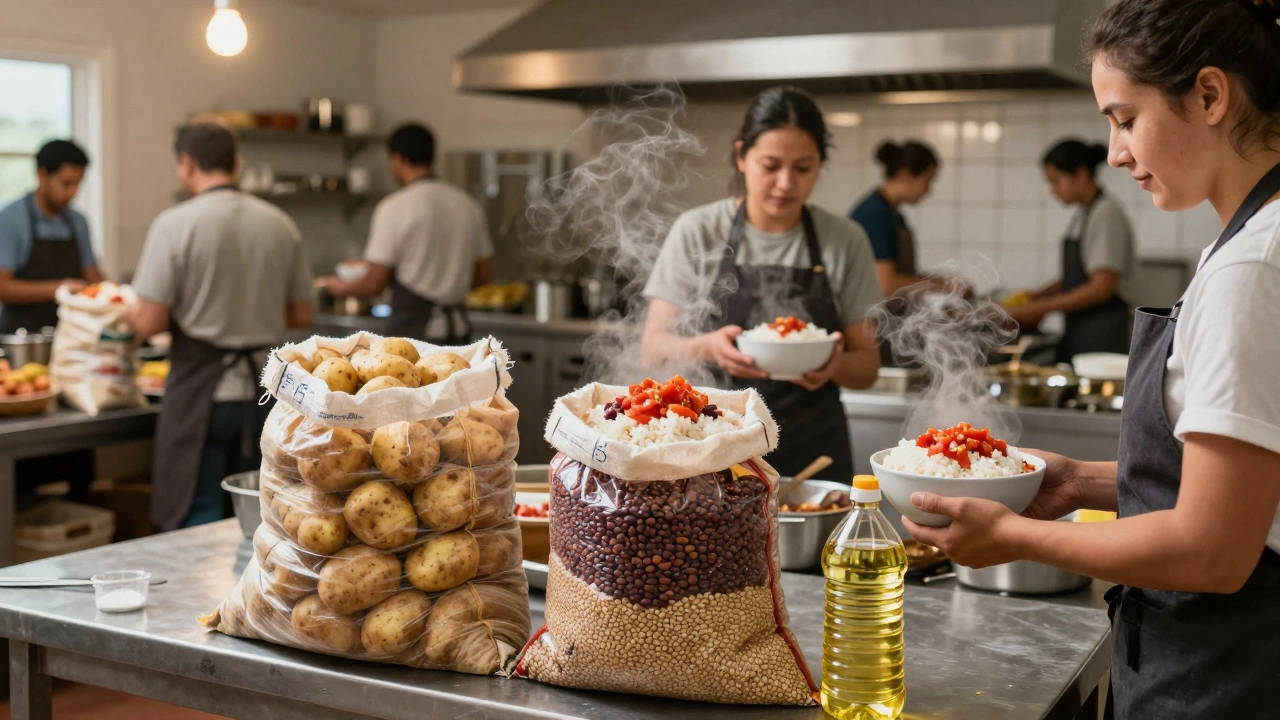
Dry beans-black, pinto, kidney, or navy-are the unsung heroes of bulk feeding. They cost less than $0.10 per serving when bought in 25-pound bags. A single pound of dry beans yields about six servings, and they’re packed with protein, fiber, and iron. Cooked with onions, garlic, and a bay leaf, they turn into a hearty, satisfying dish. In food banks across New Zealand and the U.S., beans are among the most requested items because they last for years when stored properly and stretch further than almost any other protein source.
One 25-pound bag of dry beans costs around $15-$20. That’s over 150 servings. Compare that to chicken breast, which at $8 per pound gives you maybe 16 servings. Beans don’t just feed people-they keep them full longer.
Rice: The Universal Filler
White rice isn’t glamorous, but it’s the most efficient calorie-delivery system you can buy. A 20-pound bag of long-grain white rice costs about $12-$15 and provides roughly 100 servings. Each serving is about ½ cup cooked, and it pairs with almost anything. Mix it with beans, stir in soy sauce, add a splash of vegetable broth, and you’ve got a meal that tastes like comfort.
Rice has zero allergens, is easy to digest, and doesn’t require fancy cooking. You can boil it in a big pot, let it sit, and serve it hot to hundreds. Food banks in Wellington, Christchurch, and Dunedin keep rice on hand because it’s shelf-stable for up to 30 years if kept dry and cool. It’s the foundation of emergency food kits.
Oats: Breakfast That Lasts All Day
Steel-cut or rolled oats are cheap, nutritious, and versatile. A 5-pound bag of plain oats costs under $5 and makes about 50 breakfasts. You can serve them plain with a splash of milk, sweeten them with a little brown sugar, or mix them into savory porridge with chopped vegetables and broth. Oats also work as a binder in veggie burgers or meatless loaves-stretching ground meat or lentils even further.
They’re high in soluble fiber, which helps regulate blood sugar. That’s critical for people who go long hours without food. A bowl of oats doesn’t just fill a stomach-it stabilizes energy. And unlike sugary cereals, oats don’t cause a crash hours later.
Potatoes: The Original Bulk Staple
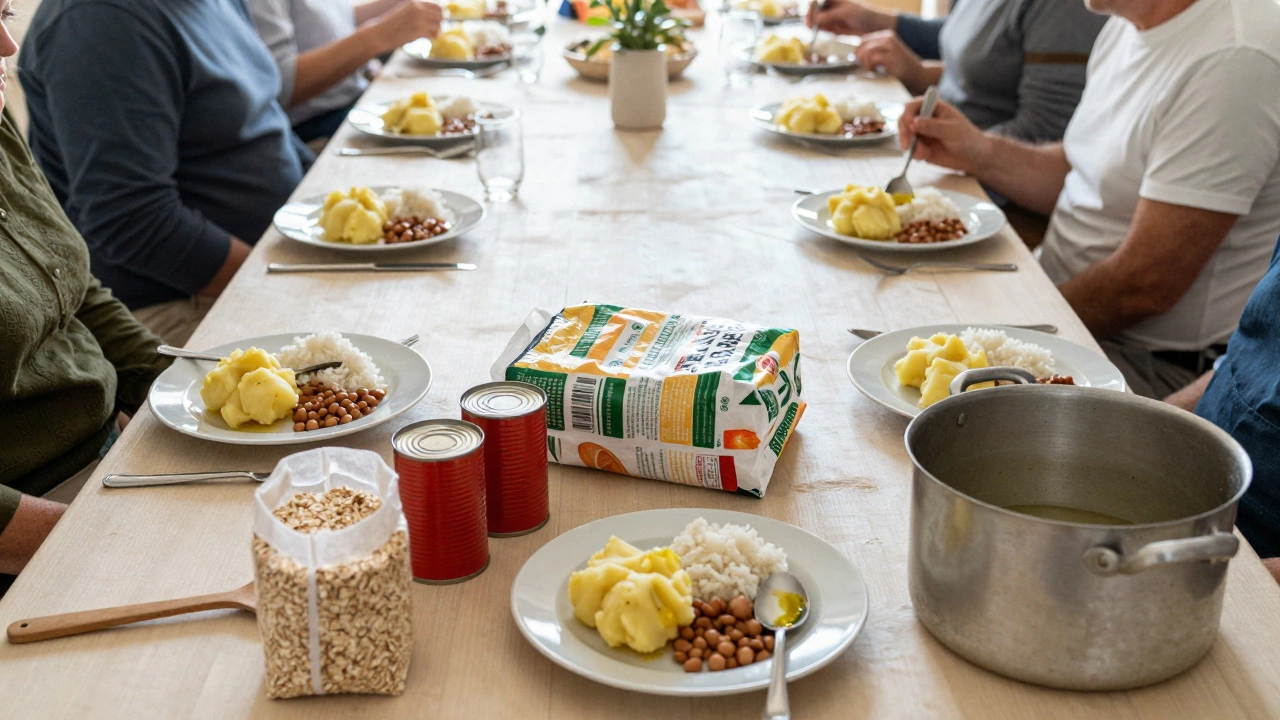
Potatoes are the most efficient food per dollar when it comes to calories and volume. A 50-pound bag of russet potatoes costs $15-$25 and yields over 100 servings. Each potato has about 160 calories, and they’re rich in potassium, vitamin C, and complex carbs.
They can be boiled, baked, mashed, or fried. You can stretch them further by mixing them with onions, cabbage, or a bit of cheese. In food kitchens, mashed potatoes are often used as a base to add gravy, making a simple dish feel more substantial. They’re also forgiving-overcooked? Still edible. Undercooked? Keep boiling.
They don’t need refrigeration and last for months in a cool, dark place. That’s why they’re a staple in every food bank pantry in New Zealand.
Canned Tomatoes and Tomato Sauce: Flavor Without the Cost
Nothing turns plain rice or beans into a meal that feels like home like tomato sauce. A case of 12 cans of crushed tomatoes or tomato sauce costs around $10-$15. Each can gives you 2-3 servings. Add them to beans, mix them with rice, or use them as a base for pasta (even if you’re just using plain noodles).
Tomatoes bring acidity, sweetness, and depth. They also help the body absorb iron from beans and grains. In food banks, tomato products are among the most donated items-not because they’re flashy, but because they make bland food taste like something people actually want to eat.
Oil and Salt: The Hidden Multipliers
You can’t talk about cheap food without mentioning the two tiny but essential ingredients: vegetable oil and salt.
A 5-liter jug of canola or sunflower oil costs about $10 and can be used to fry onions, sauté vegetables, or drizzle over cooked grains. Just a teaspoon per serving adds calories, flavor, and satisfaction. Salt? A 2-kilogram bag costs under $2. It’s not just for taste-it’s a preservative, a flavor enhancer, and a way to make bland food feel nourishing.
These aren’t meals on their own, but without them, even beans and rice taste like cardboard. They’re the secret sauce.
How to Build a Meal That Feeds 100 People for Under
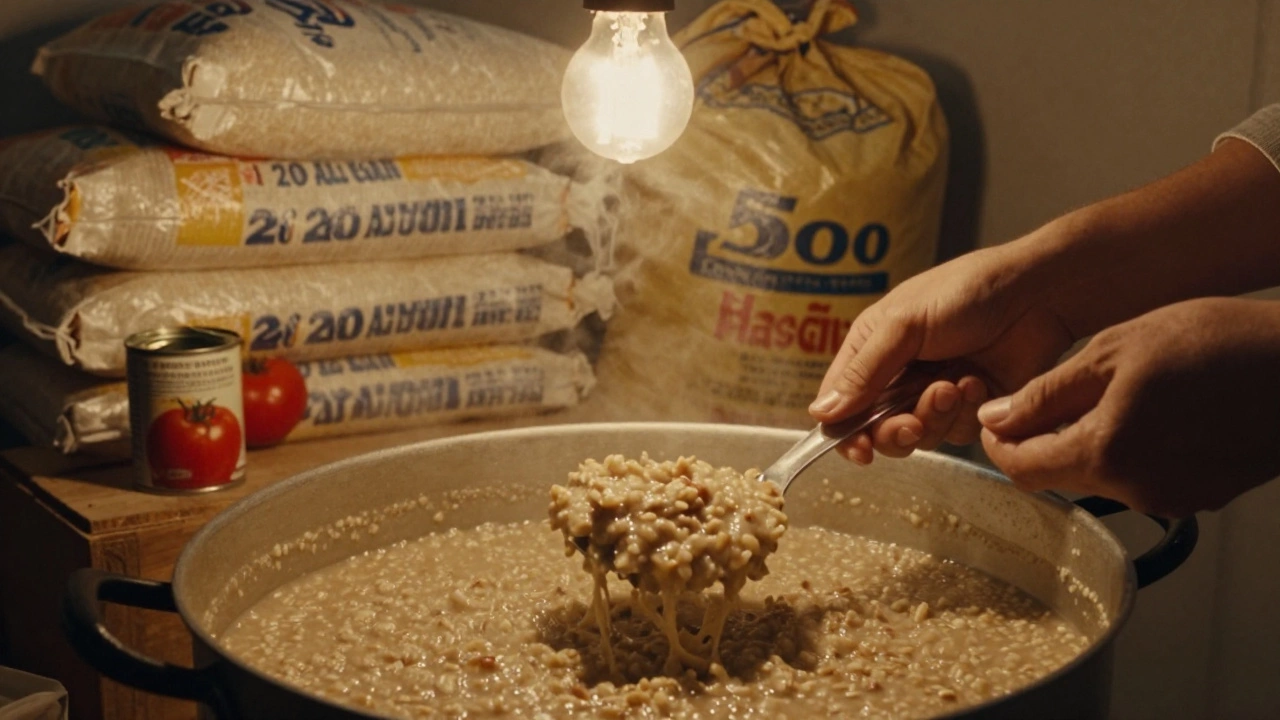
Here’s a real-world example from a Wellington community kitchen:
- 10 pounds of dry pinto beans ($6)
- 10 pounds of white rice ($8)
- 5 pounds of rolled oats ($4)
- 25 pounds of potatoes ($10)
- 6 cans of crushed tomatoes ($7)
- 1 liter of vegetable oil ($2)
- 1 kg of salt ($1)
Total: $38. This combination makes enough for 150+ servings. Add chopped onions and garlic (if you can afford them), and you’ve got a meal that’s warm, filling, and nutritious. No meat. No fancy ingredients. Just food that works.
Why These Foods Work-And What Doesn’t
Not all cheap foods are equal. Pasta is affordable, but it doesn’t offer protein or fiber like beans do. Bread is cheap, but it spoils fast and doesn’t keep well in bulk. Cheese is nutrient-dense, but it’s expensive per serving and needs refrigeration. Energy bars? They’re marketed as emergency food, but they cost 5x more per calorie than beans and rice.
The best foods for feeding large groups share three traits:
- They’re calorie-dense
- They’re shelf-stable
- They’re nutrient-rich
Beans, rice, oats, potatoes, and tomatoes check all three boxes. Everything else is a luxury.
What Food Banks Really Need
Donations of cookies, chips, or canned fruit are appreciated-but they don’t solve hunger. What food banks need most are the staples that form the backbone of real meals. A donation of 20 pounds of rice or a case of canned beans does more than a dozen boxes of cookies.
If you’re thinking of donating, ask yourself: Will this feed someone for hours? Will it last on the shelf? Can I make a full meal with it? If the answer is no, it’s not the best use of space or money.
The cheapest food that feeds the most people isn’t about novelty. It’s about basics done right. It’s about knowing what works-not what looks good on a social media post.