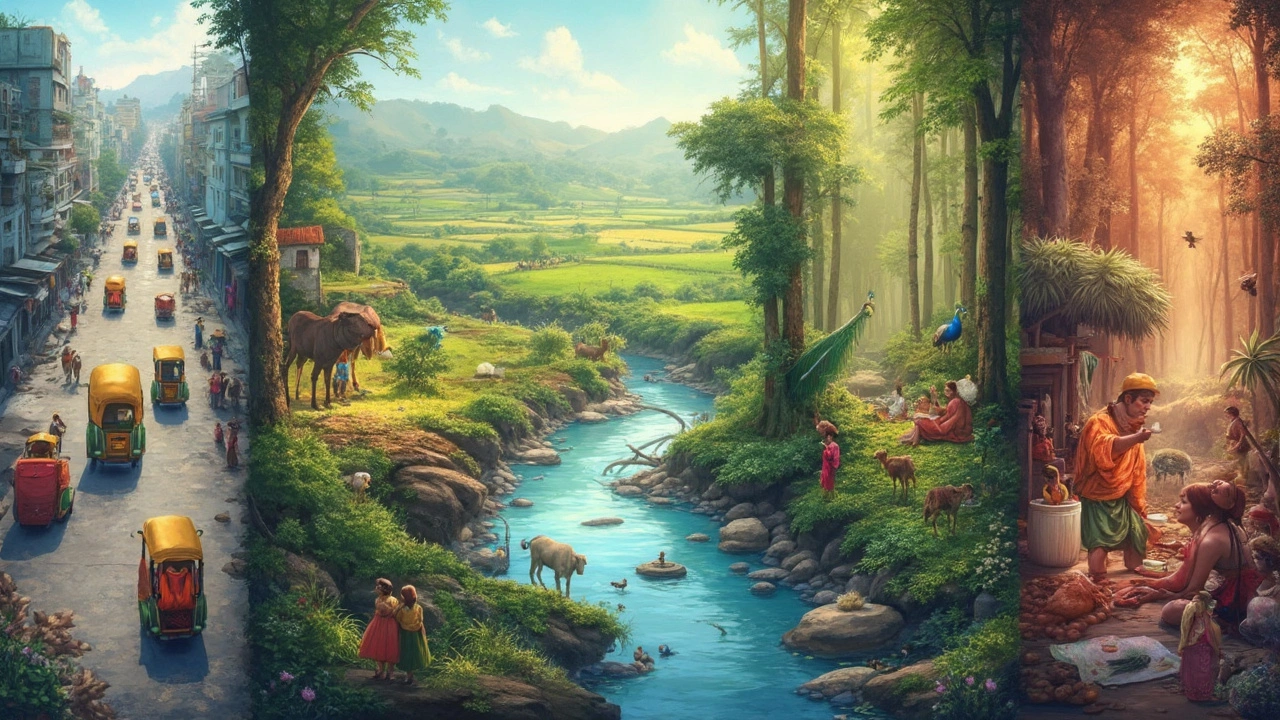
Types of Environments: What They Are and How They Shape Our World
When we talk about types of environments, the different systems where life exists, shaped by both living and nonliving factors. Also known as ecosystems, it includes everything from forests and oceans to city parks and your own backyard. These aren’t just places you see on a map—they’re living, breathing systems that keep us alive. Every breath you take, every drop of water you drink, every meal you eat comes from one of these systems. And they all fall into two basic groups: biotic, the living parts like plants, animals, fungi, and bacteria, and abiotic, the nonliving parts like air, water, soil, sunlight, and temperature. You can’t have one without the other. A tree needs sunlight and water to grow. Fish need clean water and oxygen. Even the bacteria in your gut rely on the food you eat, which came from soil and rain.
But environments don’t just exist—they provide services. environmental services, the natural processes that support life and human well-being are the quiet heroes here. Think of forests cleaning the air, wetlands filtering water, or bees pollinating crops. These aren’t luxuries—they’re essentials. And they fall into four main categories: provisioning (like food and fiber), regulating (like climate control and flood prevention), supporting (like soil formation), and cultural (like places for recreation and spiritual connection). When we damage one part of the environment, we weaken all of them. Deforestation doesn’t just kill trees—it disrupts water cycles, increases carbon, and pushes out wildlife. Plastic in the ocean doesn’t just look bad—it kills marine life and enters our food chain.
Understanding these types of environments isn’t just science class—it’s survival. It tells you why recycling matters, why local parks are worth fighting for, and why supporting clean water initiatives isn’t just nice, it’s necessary. It explains why some charities focus on reforestation, why youth groups plant native gardens, and why community outreach programs work with schools to teach kids where their food comes from. The posts below dive into exactly this: how these systems work, who’s protecting them, and how you can help—even if you’re not a scientist or activist. You’ll find real stories about environmental charities making a difference, how charity shops help reduce waste, what happens when we ignore ecosystem services, and how simple actions like joining a school club or volunteering for a food program can ripple outward. This isn’t about grand gestures. It’s about seeing the connections—and acting on them.
21 April 2025
Elara Greenwood
Ever wondered what the different types of environments are and how they impact your life? This article breaks down the five main types, with easy explanations and practical examples. Get to know not just the basics but also some interesting facts and tips to help you become more environmentally aware. Learn how these environments shape everything from your daily routine to the bigger world around us. You might see your surroundings in a new light after reading this.
Continue Reading...