Youth Organization Finder & Estimator
Enter your community details to estimate local youth organization density and discover how to find the right fit for your family or volunteering goals.
Estimated Registered Nonprofits Serving Youth
Based on state density and population metrics from IRS filings.
Likely Program Availability
How to Verify an Organization
You might be surprised to learn that there isn't one single, perfect number for how many youth organizations exist in the United States. Why? Because "youth organization" is a fuzzy term. Does it include your local Little League team? The Girl Scout troop down the street? The national headquarters of Big Brothers Big Sisters? Or just the massive nonprofits with budgets over $10 million?
If you dig into IRS tax filings and nonprofit databases, the answer shifts depending on how strictly you define the group. But we can get pretty close. Estimates suggest there are between 250,000 and 300,000 registered nonprofit entities in the US that serve children and teens as their primary mission. That’s a lot of after-school clubs, summer camps, mentoring programs, and sports leagues.
Defining What Counts as a Youth Organization
Before we count them, we have to agree on what we’re counting. In the nonprofit sector, these groups usually fall under specific IRS tax codes. Most are 501(c)(3) tax-exempt charitable organizations. Their missions typically focus on education, health, social welfare, or recreation for people under age 18.
Here is where it gets tricky. A large chunk of these aren't standalone charities. They are chapters or affiliates of larger national bodies. For example, the Boys & Girls Clubs of America has roughly 4,700 independent clubs across the country. Each club files its own taxes and operates locally, but they all wear the same badge. Do you count 4,700 organizations, or one big network? Most researchers count the local units because that’s where the actual work happens.
Then there are the informal groups. School booster clubs, church youth groups, and neighborhood rec centers often operate without formal 501(c)(3) status. If you include every organized activity for kids, the number could easily double. But for this article, we are sticking to formally registered nonprofits because those are the ones you can actually look up, donate to, or volunteer with through official channels.
The Big Players: National Networks vs. Local Nonprofits
When people ask about youth orgs, they usually picture the giants. And yes, they dominate the landscape in terms of visibility and funding. According to data from GuideStar (now Candid), a handful of national networks account for billions in annual revenue and millions of participants.
| Organization | Approx. Local Units | Primary Focus |
|---|---|---|
| Boys & Girls Clubs | 4,700+ | After-school care, mentorship |
| Girl Scouts | 200+ councils | Leadership, STEM, outdoors |
| Scouting America | 300+ councils | Citizenship, outdoor skills |
| YMCA | 2,600+ associations | Fitness, childcare, community |
| Big Brothers Big Sisters | 200+ agencies | One-on-one mentoring |
Notice the difference in scale. While Scouting America (formerly Boy Scouts of America) has consolidated its councils significantly in recent years due to financial restructuring, the YMCA remains highly decentralized. Each YMCA is essentially its own nonprofit entity. This decentralization is why the total count is so high. You aren't just dealing with five big brands; you're dealing with thousands of local hubs.
Beyond these famous names, there is a long tail of smaller, specialized groups. Think of organizations focused solely on foster youth, homeless teens, or refugee integration. These might only have 50 members in a single city, but they still count. A study by the Urban Institute suggests that small nonprofits (under $500k in revenue) make up nearly 70% of all youth-serving entities, even though they hold a tiny fraction of the total money.
Where Do They All Live? Geographic Distribution
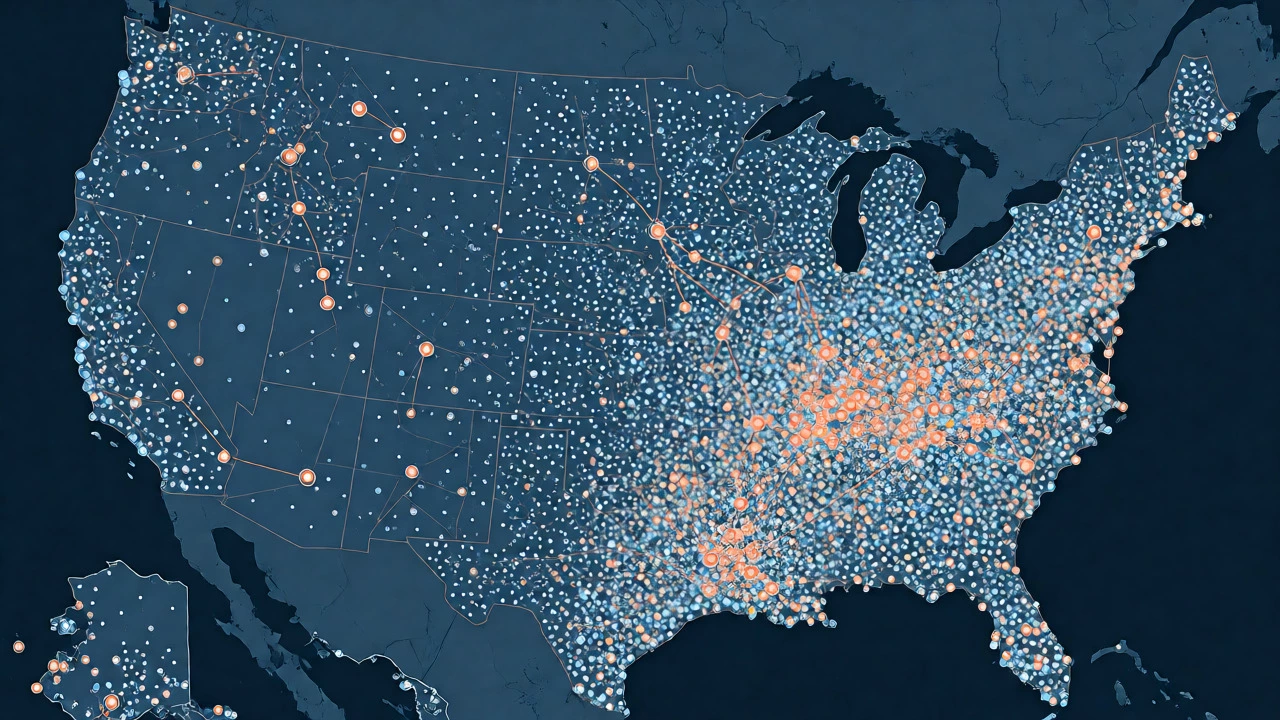
It’s not evenly spread out. If you live in rural Montana, you might see fewer options than someone in Brooklyn. Generally, youth organizations cluster where population density is high and where public funding for schools and parks is robust-or sometimes, where it’s lacking, creating a gap that nonprofits fill.
California, Texas, New York, and Florida consistently top the lists for the highest number of registered youth nonprofits. This makes sense given their populations. But if you adjust for population size, states like Vermont and Massachusetts often punch above their weight. Why? Strong traditions of civic engagement and higher disposable income allow communities to support more niche programs, like competitive robotics teams or elite arts academies.
Urban areas tend to have more diversity in program types. You’ll find everything from coding bootcamps for middle schoolers to urban gardening collectives for high schoolers. Rural areas lean heavily on sports and faith-based groups. If you’re looking for a specific type of program-say, environmental science for kids-you’ll likely have better luck finding a dedicated organization in a metro area than in a small town.
How to Find and Verify an Organization Near You
So, you know there are hundreds of thousands of them. How do you find the right one? Don’t just Google "youth clubs near me." That will give you mixed results, including commercial businesses that charge hefty fees. Here is a practical workflow:
- Use Candid’s Search Tool: This is the gold standard for nonprofit data. You can filter by location, mission keywords (e.g., "youth," "teens," "children"), and budget size. It pulls directly from IRS Form 990 filings, so you know the org is legit.
- Check Local Community Coalitions: Most cities have a "United Way" affiliate or a municipal Parks & Recreation department website. They maintain curated lists of vetted partners. This saves you from digging through raw tax data.
- Look for Accreditation: Not all youth orgs are equal. Look for badges from groups like the National AfterSchool Association or state-specific licensing boards for childcare and youth services.
- Ask About Staff-to-Child Ratios: This is a key quality indicator. High-quality programs keep ratios low (often 1:10 for older kids, 1:5 for younger). If a website doesn’t list this, call them. Good orgs will tell you immediately.
Be wary of organizations that don’t have a clear physical address or rely entirely on social media for communication. While digital-first nonprofits are growing, established youth programs need physical space for safety and supervision.
Trends Shaping the Number of Organizations
The number of youth organizations isn’t static. It fluctuates based on economic conditions and policy changes. Recently, we’ve seen two opposing forces at play.
On one hand, consolidation is happening. Large networks are merging local chapters to cut administrative costs. We saw this clearly with Scouting America’s council mergers. Fewer legal entities mean fewer numbers on paper, even if the service delivery stays similar.
On the other hand, new niches are emerging. Post-pandemic, there has been a surge in mental health-focused youth groups. Organizations providing therapy, counseling, or peer-support circles for anxious teens are popping up everywhere. Also, STEM and coding clubs are expanding rapidly, often starting as small grassroots initiatives before incorporating as nonprofits.
Funding models are changing too. More youth orgs are moving toward hybrid models, mixing grant funding with sliding-scale tuition. This allows them to remain sustainable without relying solely on donations, which keeps them alive longer. A nonprofit that survives ten years is more likely to stay open than one that relies on a single major donor who might move away.
Why This Matters for Parents and Volunteers
Understanding the sheer volume of options helps you manage expectations. You won’t find a perfect fit instantly. With so many organizations, the market is fragmented. One group might offer great academics but poor transportation options. Another might have amazing mentors but limited hours.
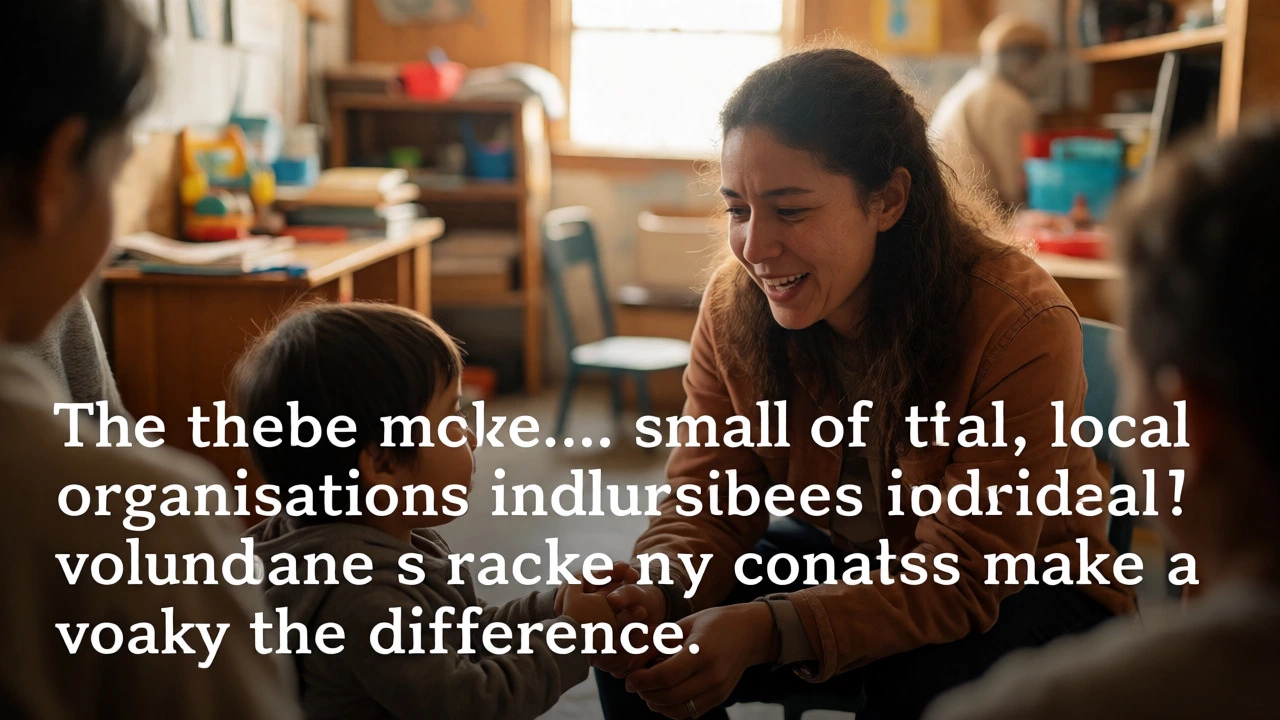
For volunteers, this fragmentation means opportunity. Small, local nonprofits are often desperate for help because they lack the HR departments of the big guys. Your time might have a bigger impact in a small reading buddy program than in a massive, bureaucratic system where you’re just a drop in the bucket.
For parents, it means you have leverage. If a local youth center has a waiting list, check the next block over. There’s likely another option. Don’t assume scarcity. The problem usually isn’t a lack of organizations; it’s a lack of information about them.
Are public schools considered youth organizations?
Generally, no. Public schools are government-funded institutions, not nonprofits. However, Parent-Teacher Associations (PTAs) linked to schools are separate 501(c)(3) entities. So while the school itself isn't counted in nonprofit statistics, the PTA supporting it is.
Do sports leagues count as youth organizations?
Yes, if they are non-profit. Many local soccer, baseball, and basketball leagues are incorporated as nonprofits to avoid paying federal taxes on dues and concessions. Commercial leagues that aim to make a profit for owners are not included in these counts.
How much does it cost to join a youth organization?
Costs vary wildly. National organizations like the YMCA or Boys & Girls Clubs often use sliding scales based on family income, making participation affordable or free for low-income families. Specialized programs like travel sports or private music lessons can cost hundreds of dollars per month.
What is the largest youth organization in the US?
By reach and participant numbers, the YMCA is often cited as the largest, serving millions annually. By individual member count, Girl Scouts and Scouting America also claim tens of millions of cumulative members, though active current membership is lower.
Can I start my own youth organization?
Absolutely. Many successful orgs started as a single parent’s idea. You’ll need a board of directors, a clear mission statement, and eventually, 501(c)(3) status if you want tax-deductible donations. Start small, run a pilot program, and incorporate once you have consistent demand.