Environmental Mental Health Impact Calculator
Assess Your Environment
Your Results
Complete the assessment to see how your environment impacts your mental health.
Personalized Recommendations
We often think of mental illness as a purely internal struggle-a chemical imbalance or a result of personal trauma. But what if the air you breathe, the noise outside your window, or the changing climate is playing a major role in how you feel? Research increasingly shows that our physical environment is not just a backdrop for our lives; it is an active participant in our psychological health. Understanding these links isn't about blaming nature for our struggles. It’s about recognizing that we can’t fix our minds while ignoring the world around us.
The Air We Breathe and Brain Health
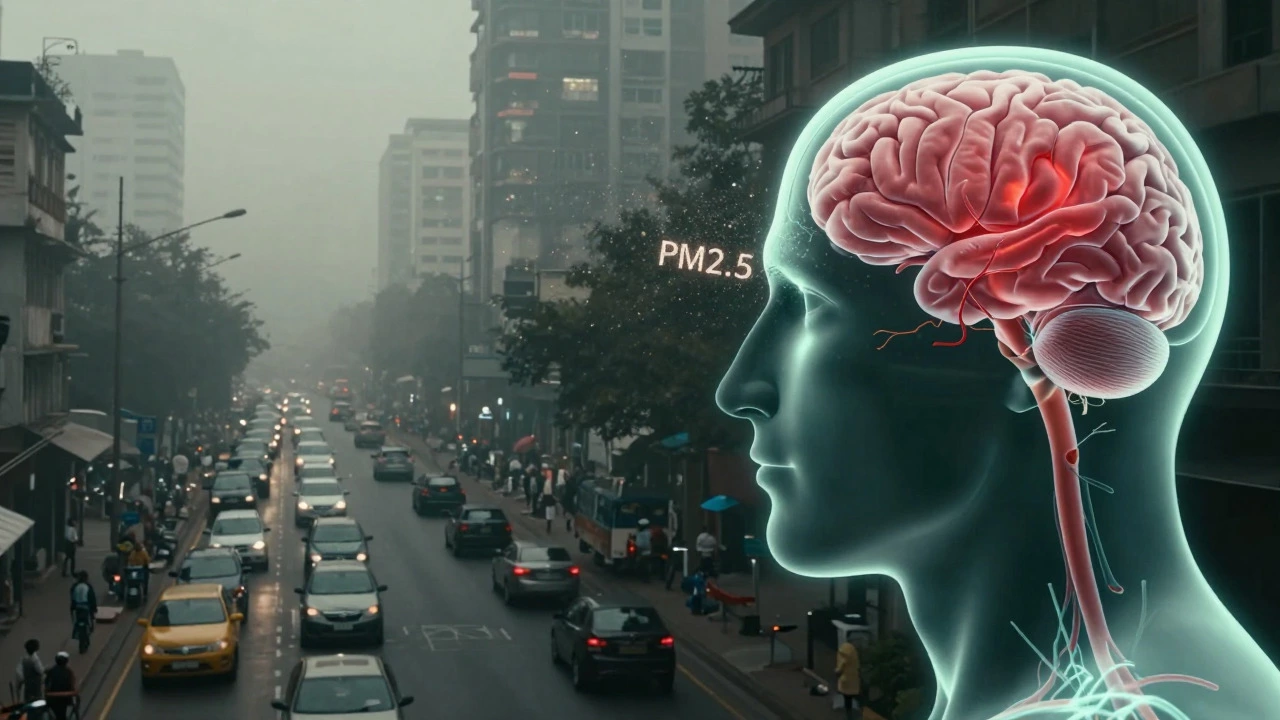
You might not see it, but air pollution is doing more than just irritating your lungs. Fine particulate matter, known as PM2.5, consists of tiny particles small enough to enter your bloodstream and cross the blood-brain barrier. Once inside, they trigger inflammation. Chronic inflammation in the brain is now strongly linked to conditions like depression and anxiety. A study published in *The Lancet Psychiatry* found that long-term exposure to high levels of traffic-related air pollution significantly increases the risk of developing depression. If you live near a busy highway or in an industrial zone, your daily commute might be quietly taxing your mental resilience.
It’s not just cars. Indoor air quality matters too. Poor ventilation in homes and offices can lead to "sick building syndrome," where occupants experience headaches, fatigue, and difficulty concentrating. These symptoms often mimic or exacerbate underlying mental health issues. When your brain is constantly fighting off low-grade stressors from poor air quality, it has less energy to handle emotional challenges.
Noise Pollution: The Stress You Can’t Escape
Have you ever tried to relax while a jackhammer drills next door? That spike in cortisol-the stress hormone-is real. Noise pollution is a chronic environmental stressor. Unlike a loud concert, which ends, urban noise is often relentless. Traffic hums, planes fly overhead, and construction never seems to stop. This constant auditory assault keeps your body in a state of low-level alert. Over time, this disrupts sleep patterns. And when you don’t sleep well, your ability to regulate emotions plummets.
Research from the World Health Organization highlights that long-term exposure to road traffic noise is associated with an increased risk of cardiovascular disease and mental health disorders, including anxiety and depression. Children living in noisy environments are also at higher risk for cognitive impairments and behavioral problems. It’s a cycle: noise causes stress, stress ruins sleep, and lack of sleep worsens mental health. Breaking this cycle often requires more than just earplugs; it requires urban planning that prioritizes quiet zones.
Climate Change and Eco-Anxiety
Let’s talk about the elephant in the room: climate change. It’s no longer just a future threat; it’s a present-day psychological burden. Many people, especially younger generations, suffer from "eco-anxiety"-a chronic fear of environmental doom. This isn’t irrational. When you watch wildfires consume forests or floods destroy neighborhoods, your sense of safety erodes. This existential dread can manifest as generalized anxiety, panic attacks, or even depressive episodes.
Beyond the psychological weight of knowing the planet is warming, the direct impacts of extreme weather events are devastating. Survivors of hurricanes, floods, and droughts often develop post-traumatic stress disorder (PTSD). The loss of home, community, and livelihood creates a perfect storm for mental health crises. As climate events become more frequent and severe, the collective mental toll on communities grows. We need to talk about climate change not just as an environmental issue, but as a public health emergency.

The Healing Power of Green Spaces
On the flip side, nature offers a powerful antidote. Access to green spaces-parks, gardens, forests-is one of the most effective environmental interventions for mental health. Being in nature lowers cortisol levels, reduces blood pressure, and improves mood. This isn’t just a feeling; it’s biology. Studies show that spending at least 120 minutes a week in nature is associated with higher levels of self-reported health and wellbeing.
Urban design plays a huge role here. Cities with abundant parks and tree-lined streets report lower rates of mental distress among residents. Green roofs and vertical gardens can also help mitigate heat islands and improve air quality, creating a double benefit. If you don’t have a backyard, make an effort to visit local parks regularly. Even looking at trees from your window can reduce stress. Nature doesn’t judge, it doesn’t demand, and it provides a necessary reset for our overstimulated brains.
Social Environment and Community Isolation
Our environment isn’t just physical; it’s social. Social isolation is a significant environmental factor contributing to mental illness. In many modern cities, despite being densely populated, people feel profoundly alone. Lack of community centers, unsafe public spaces, and car-centric urban planning can hinder social interaction. When you have nowhere to gather safely, connections fray.
Loneliness is as damaging to health as smoking fifteen cigarettes a day. It increases the risk of dementia, heart disease, and premature death. Communities that invest in public spaces-libraries, community gardens, plazas-foster social cohesion. Strong social networks act as a buffer against mental health struggles. They provide support, belonging, and purpose. Rebuilding these connections is crucial for mental wellness.
| Environmental Factor | Mental Health Impact | Mechanism |
|---|---|---|
| Air Pollution | Depression, Anxiety | Inflammation, Neurotoxicity |
| Noise Pollution | Stress, Sleep Disorders | Cortisol Spike, Disrupted Circadian Rhythm |
| Climate Change | Eco-Anxiety, PTSD | Existential Threat, Trauma from Events |
| Lack of Green Space | Increased Stress, Cognitive Fatigue | Reduced Restoration, Sensory Overload |
| Social Isolation | Loneliness, Depression | Lack of Support, Reduced Belonging |

Light Exposure and Seasonal Affective Disorder
Don’t underestimate the power of light. Seasonal Affective Disorder (SAD) affects millions during darker months. Lack of sunlight disrupts your circadian rhythm, leading to fatigue, oversleeping, and low mood. In regions with long winters, this is a serious public health concern. Even in summer, artificial lighting at night can suppress melatonin production, disrupting sleep and mood regulation.
Maximizing natural light in your home and workspace can help. Open curtains during the day, take breaks outside, and consider light therapy lamps if you’re prone to seasonal dips. Your body needs those light cues to stay balanced.
What Can We Do?
So, how do we protect our mental health in a challenging environment? Start small. Advocate for cleaner air policies in your city. Support urban greening projects. Reduce noise in your immediate space with soundproofing or white noise machines. Connect with neighbors. Join local environmental groups-not just to save the planet, but to build community. Every step toward a healthier environment is a step toward a healthier mind.
We are part of our environment. Ignoring its impact on our psychology is like treating a fever without addressing the infection. By understanding these links, we can take proactive steps to create spaces that nurture both our bodies and our minds.
Can air pollution really cause depression?
Yes. Studies show that long-term exposure to fine particulate matter (PM2.5) increases inflammation in the brain, which is linked to a higher risk of developing depression and anxiety disorders.
How does noise pollution affect mental health?
Chronic noise exposure raises cortisol levels, disrupts sleep, and keeps the body in a state of stress. This can lead to anxiety, irritability, and an increased risk of depression over time.
What is eco-anxiety?
Eco-anxiety is a chronic fear of environmental doom caused by climate change. It involves feelings of helplessness, anger, and grief regarding the state of the planet and can manifest as general anxiety or depression.
How much time in nature is needed for mental health benefits?
Research suggests that spending at least 120 minutes (two hours) per week in nature is associated with significantly better health and wellbeing outcomes.
Does living in a city increase the risk of mental illness?
Living in dense urban areas can increase risk due to factors like noise pollution, lack of green space, and social isolation. However, access to parks and strong community ties can mitigate these risks.
Can indoor plants improve mental health?
While not a substitute for outdoor nature, indoor plants can improve air quality and reduce stress levels. Caring for them also provides a sense of purpose and connection to life.
How does climate change directly impact mental health?
Beyond eco-anxiety, extreme weather events like floods and fires cause trauma and PTSD. Loss of home and community leads to prolonged grief and economic stress, worsening mental health outcomes.
Is there a link between light exposure and mood?
Yes. Lack of natural sunlight can disrupt circadian rhythms and melatonin production, leading to Seasonal Affective Disorder (SAD), characterized by low mood, fatigue, and sleep disturbances.