
School Club Success Score Calculator
Evaluate your school club's health by rating each of the five critical success factors. Click on each card to adjust the score.
Student Ownership
0/5Do students lead meetings, make decisions, and take responsibility for events?
Clear Goals
0/5Is there a defined mission? Are objectives posted, measurable, and revisited regularly?
Consistency
0/5Do you meet at the same time/place weekly with a structured agenda and reliable routine?
Inclusivity
0/5Is the culture welcoming? Do members feel safe to speak up, make mistakes, and ask questions?
Recognition
0/5Are achievements celebrated publicly? Is individual effort acknowledged and impact measured?
Ready to Evaluate
Rate each factor above to see your club's success potential.
Imagine a room in the back of the high school. It’s Tuesday afternoons. Some tables are empty. The advisor is grading papers on their phone. Two students are arguing about whether to order pizza or tacos, but nobody else cares. This isn’t a disaster-it’s just a common scene. Many school clubs start with excitement but fade into mediocrity within months. Why do some groups thrive while others dissolve? It rarely comes down to budget or fancy equipment. Success usually hinges on human dynamics, clear purpose, and consistent habits.
We often think that having a cool name or a popular teacher sponsor guarantees attendance. But data from educational studies suggests otherwise. Students stay engaged when they feel ownership, see tangible progress, and connect with peers who share their values. In this guide, we break down the specific mechanics that turn a loose gathering into a vibrant community. We’ll look at structure, leadership, and the subtle psychological triggers that keep students coming back week after week.
The Power of Student Ownership
The biggest mistake advisors make is running the show. When an adult dictates every meeting agenda, plans every event, and solves every conflict, students become passive attendees rather than active participants. They show up because they have to, not because they want to. True student leadership develops when adults step back and let teenagers take the wheel.
Consider the difference between a debate team where the coach writes all the arguments versus one where students research and draft their own cases. In the latter, even if the performance is rough initially, the investment is real. Students care more when they skin is in the game. You can foster this by implementing a rotating presidency or committee system. Let different members lead meetings, handle logistics, or manage social media.
- Delegate early: Don’t wait until senior year to give responsibilities. Freshmen need roles too, even small ones like managing sign-in sheets or ordering snacks.
- Allow failure: If a student-led event has low turnout, don’t rescue it immediately. Guide them through a post-mortem analysis. What went wrong? How can they fix it next time?
- Trust their ideas: Teenagers often understand their own culture better than adults do. If they suggest a TikTok campaign instead of a flyer drive, support it.
This shift from "teacher-led" to "student-driven" creates a sense of belonging. When you own something, you protect it. That emotional stake is the foundation of long-term retention.
Clarity of Purpose and Goals
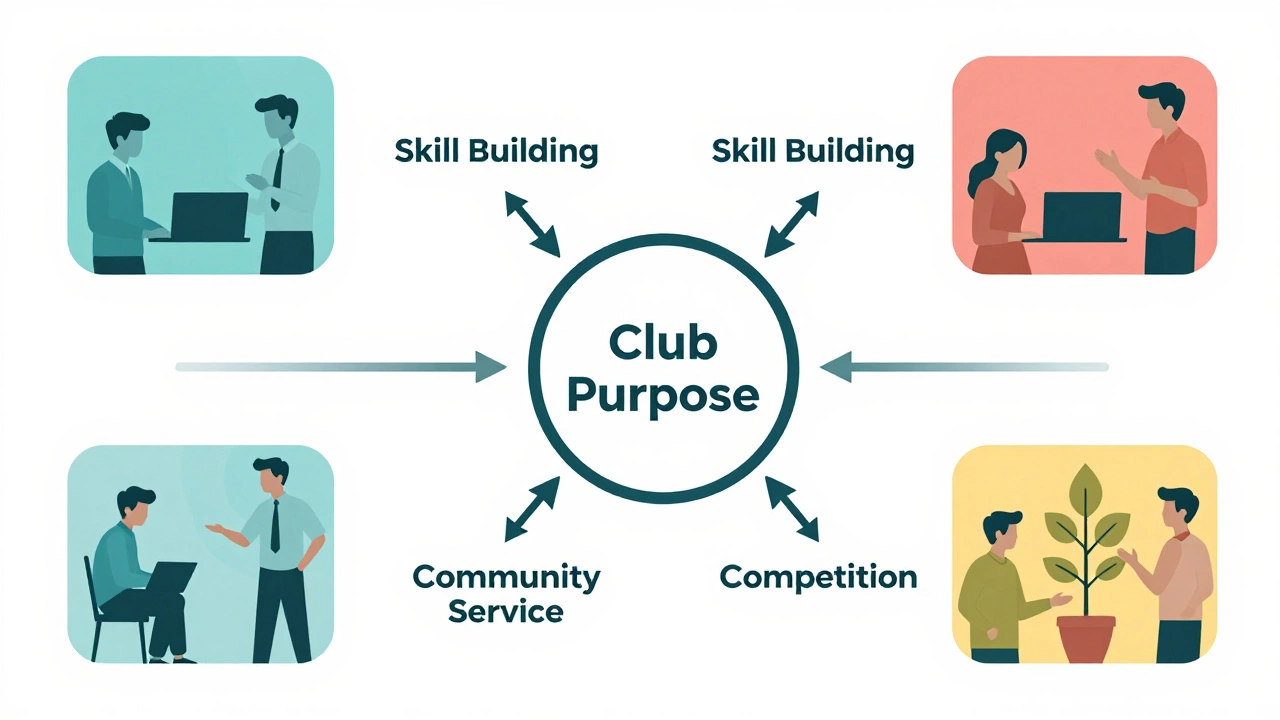
A successful club needs a "why." Is it about winning awards? Building skills? Making friends? Serving the community? Without a clear mission, meetings drift into aimless chatter. Students join expecting growth or impact, and if they don’t see it, they leave.
Take a robotics club as an example. If the goal is purely competitive, the focus should be on engineering principles and strategy. If the goal is educational outreach, the focus might shift to teaching younger kids how to code. Mixing these goals without clarity leads to frustration. Some members want to race; others want to teach. Neither feels satisfied.
Define your core objectives at the start of the semester. Write them down. Post them in the room. Revisit them monthly. For instance, a book club might set a goal of reading four diverse novels and hosting two author Q&A sessions. A gardening club might aim to donate fifty pounds of produce to local food banks. These concrete targets give members something to work toward. Progress becomes visible. Motivation stays high.
| Goal Type | Example Activity | Success Metric |
|---|---|---|
| Skill Development | Workshops, peer tutoring | Number of certifications earned |
| Community Service | Volunteer drives, fundraisers | Hours logged, funds raised |
| Social Connection | Game nights, retreats | Attendance retention rate |
| Competition | Tournaments, showcases | Placement rankings |
When goals are vague, expectations are mismatched. Clear aims align efforts. Everyone rows in the same direction.
Consistency and Routine
Reliability builds trust. If a club meets sporadically-once every three weeks, then twice in one month-students lose interest. Life gets busy. Homework piles up. Sports practice intensifies. If the club isn’t a steady presence, it falls off the radar.
Establish a predictable rhythm. Meet at the same time, in the same place, every week. Keep meetings short and focused. Forty-five minutes is often enough. Longer sessions can drag if there’s no structured agenda. Start with five minutes of icebreaker or social time. Spend thirty minutes on core activities. End with ten minutes for planning and announcements.
Create a simple checklist for each meeting:
- Welcome and roll call
- Review last week’s action items
- Main activity or discussion
- Assign tasks for next week
- Quick feedback round
This structure reduces chaos. New members know what to expect. Returning members appreciate the efficiency. Consistency also helps with recruitment. Word spreads faster when people know exactly when and where to find you. Predictability is comforting in the unpredictable world of high school schedules.
Inclusive Culture and Psychological Safety
You can have great goals and solid routines, but if the vibe is toxic, no one will stay. Inclusivity isn’t just a buzzword; it’s a practical necessity. A successful club welcomes beginners, respects different opinions, and handles conflicts maturely.
Think about the first impression. Does a new student walk in and feel intimidated? Are existing members clustered in tight circles, ignoring newcomers? Or is there someone designated to greet guests and explain what’s happening? Small gestures matter. Name tags help. Seating arrangements that mix old and new faces break down cliques.
Psychological safety means feeling safe to speak up, make mistakes, and ask questions without fear of ridicule. In a coding club, this might mean celebrating bugs as learning opportunities rather than failures. In a drama club, it could involve constructive critique during rehearsals instead of harsh judgment. Leaders model this behavior. When advisors and officers admit their own errors, it gives permission for everyone else to do the same.
Diversity of thought strengthens outcomes. A chess club that only attracts grandmasters becomes an echo chamber. One that welcomes casual players brings fresh perspectives and keeps the game fun. Encourage cross-pollination. Invite members from other clubs to collaborate on projects. Partner with neighboring schools. Expand your network. Exposure to different viewpoints prevents stagnation.

Visible Impact and Recognition
People crave recognition. It’s human nature. When students put effort into a project, they want to see the results. They want to know their work mattered. A successful club celebrates wins, big and small.
Showcase achievements publicly. Put photos on the school bulletin board. Share stories on the district website. Send thank-you notes to partners and sponsors. Host an end-of-year gala where members present their contributions. These rituals reinforce value. They tell members, "Your time here counts."
Also, measure impact quantitatively. Did the environmental club plant two hundred trees? Did the literacy group tutor fifty children? Numbers provide evidence of success. They help secure funding for future initiatives. They boost morale. Seeing a graph climb upward feels good. It validates the hard work.
Don’t forget individual recognition. Highlight "Member of the Month." Acknowledge consistent attendance. Praise creative solutions. Personalized appreciation goes further than generic praise. It shows you notice the person behind the contribution.
Adaptability and Feedback Loops
No club is perfect from day one. The best ones evolve. Regular feedback loops allow continuous improvement. Survey members quarterly. Ask what they love, what they hate, and what they’d change. Anonymous surveys often yield honest insights. Public forums encourage dialogue.
Be willing to pivot. If a tradition isn’t working, drop it. If a new idea sparks energy, amplify it. Flexibility demonstrates responsiveness. It shows leaders listen. Sticking to outdated methods out of habit kills momentum. Adaptability keeps the club relevant.
For example, a photography club might start with darkroom techniques. As technology shifts, they might transition to digital editing and drone videography. Resisting change alienates tech-savvy students. Embracing it attracts them. Stay current. Monitor trends. Experiment boldly. Failure teaches more than comfort ever will.
How many students should be in a successful school club?
There is no magic number. Quality matters more than quantity. A club with ten highly engaged members outperforms one with fifty apathetic ones. Aim for a manageable size that allows meaningful interaction. Generally, groups of 10-25 work well for most activities. Larger groups may require splitting into sub-committees to maintain personal connections.
What role does the faculty advisor play in club success?
The advisor acts as a mentor and resource manager, not a dictator. Their job is to ensure safety, compliance with school policies, and access to facilities. They guide students through decision-making processes but avoid making decisions for them. An effective advisor asks questions rather than giving orders. They facilitate growth rather than controlling outcomes.
How can a club attract new members?
Visibility and word-of-mouth are key. Participate in school fairs. Create eye-catching posters. Leverage social media platforms popular with students. Offer trial periods where newcomers can attend without commitment. Existing members should personally invite friends. Authentic enthusiasm is contagious. People join because they see others enjoying themselves.
Is funding necessary for a successful club?
While helpful, funding is not strictly necessary. Many thriving clubs operate on shoestring budgets. Creativity often compensates for lack of money. Seek free resources from local businesses. Apply for small grants. Organize low-cost fundraising events. Focus on experiences that don’t require expensive materials. Passion and organization matter far more than financial backing.
How do you handle conflicts within the club?
Address issues promptly and privately. Listen to all sides before judging. Establish clear codes of conduct at the beginning of the year. Mediate disputes calmly. Encourage empathy and compromise. If behavior violates school policies, involve administration appropriately. Healthy conflict resolution teaches valuable life skills. Ignoring problems allows resentment to fester.