
$100 Fundraising Challenge Tracker
Use this tool to simulate or track a real $100 fundraising campaign. Add donors as they contribute to see how close you are to your goal.
Most people think you need a gala dinner or a marathon to make a difference. That’s the biggest myth in charity fundraising. You don’t need thousands of dollars in overhead or months of planning to help your favorite cause. In fact, raising just $100 is one of the most effective ways to build momentum, test new ideas, and engage friends who might not commit to larger donations. It’s low-risk, high-reward, and surprisingly easy if you know where to look.
Think about it: $100 covers a week of groceries for a family in crisis, provides school supplies for ten students, or funds emergency veterinary care for a shelter animal. When you break down the goal into manageable chunks, it stops feeling like a monumental task and starts looking like a weekend project. Whether you are a student, a busy professional, or someone organizing a neighborhood cleanup, this guide will show you exactly how to hit that three-figure target without burning out.
The Psychology of Small Donations
Why does asking for $100 work better than asking for $1,000 when you’re starting out? It comes down to friction. A large ask requires a decision; a small ask feels like an impulse buy. Behavioral economics tells us that people are more likely to act when the barrier to entry is low. If you ask a friend for $5, they might hesitate because it feels too small to matter. But if you frame it as "help me reach my $100 challenge," the context changes. They aren’t just giving five bucks; they are helping you win a game.
This approach leverages social proof. When two or three people donate early, others feel compelled to join in so they don’t miss out on being part of the group effort. You don’t need a massive audience. You need five people willing to give $20, or twenty people willing to give $5. The key is clarity. Be specific about what the money does. "Help me raise $100 for local food bank supplies" is infinitely more compelling than "Please donate." Specificity creates urgency and tangible outcomes.
Strategy One: The Peer-to-Peer Challenge
Peer-to-peer fundraising is a method where individuals raise money from their personal networks for a nonprofit organization. It’s the backbone of modern digital charity. For a $100 goal, you don’t need a complex platform. You can use simple tools like GoFundMe, JustGiving, or even Venmo with a clear description.
Here is the step-by-step process to execute this efficiently:
- Set a deadline: Give yourself seven days. Urgency drives action.
- Create a visual hook: Use a photo of the cause, not just text. People connect with faces and places.
- Break it down: Post updates like "I’m $20 away from hitting my goal!" This invites last-minute contributions.
- Personalize messages: Don’t blast everyone at once. Send individual texts to your top ten contacts first. Ask them personally, then share publicly once you have initial traction.
In Wellington, we see this often with local sports teams or school groups. A player raises $100 for equipment by asking teammates’ families. It works because the relationship already exists. Trust is pre-built. You aren’t asking strangers for cash; you’re inviting friends to support something you care about.
Strategy Two: Micro-Events and Pop-Ups
If you prefer face-to-face interaction, consider hosting a micro-event. This isn’t a full-blown party. It’s a focused activity designed to generate small, frequent transactions. Think of a bake sale, but smaller. Instead of baking forty cupcakes, bake twelve and sell them at a local park during morning coffee hours. Or host a "bring a book" swap where participants pay $5 to take home a used novel.
| Activity | Estimated Cost | Potential Revenue | Time Commitment |
|---|---|---|---|
| Car Wash | $10 (supplies) | $150+ | 3 hours |
| Bake Sale | $20 (ingredients) | $80-$120 | 4 hours prep + 2 hours selling |
| Garage Sale | $0 (used goods) | $50-$200 | 1 day setup/selling |
| Sponsored Walk | $0 | $100-$300 | 1 hour walk + 1 week soliciting |
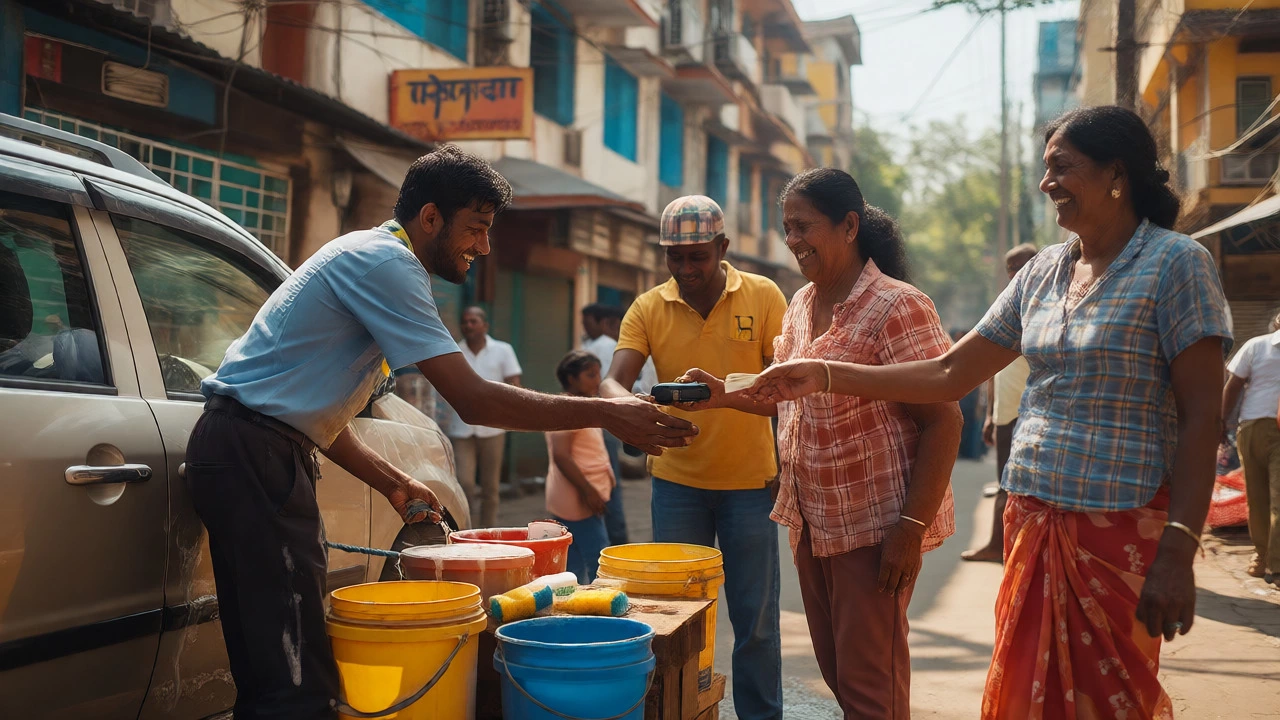
A car wash is particularly effective for hitting $100 quickly. With basic soap, sponges, and buckets, you can wash ten cars at $10 each. Find a location with high foot traffic, like near a shopping center or a busy residential street. Bring a sign that clearly states the beneficiary. "Proceeds go to [Charity Name]" adds legitimacy. People are more generous when they know exactly where their money goes.
Strategy Three: Leveraging Skills and Services
Do you have a skill that people value? Dog walking, lawn mowing, graphic design, or tutoring? Offer these services for a flat donation rate. This transforms time into capital without requiring upfront investment. For example, offer to mow lawns for neighbors for a suggested donation of $20 per yard. Five yards gets you to $100 easily.
This method works well because it provides immediate value to the donor. They get a clean lawn; you get funds. It’s a fair exchange. Plus, it expands your network. The neighbor who hires you might tell another neighbor, leading to more gigs. Keep track of your earnings in a dedicated envelope or digital wallet to ensure every dollar goes straight to the charity.
Consider seasonal opportunities. In spring, garden cleanup services are in high demand. In summer, beach cleanups paired with a donation box attract tourists and locals alike. Aligning your service with current needs increases the likelihood of participation.

Common Pitfalls to Avoid
Even simple campaigns fail if you make certain mistakes. The most common error is lack of transparency. If donors don’t know where the money goes, they won’t give. Always name the specific organization or project. Another issue is poor timing. Asking for donations during major holidays or exam periods can yield lower results. Choose a quiet week when people have mental bandwidth to engage.
Also, avoid overcomplicating the payment process. If you require people to fill out long forms or create accounts, you’ll lose them. Cash, direct bank transfer, or a simple QR code linked to a payment app reduces friction significantly. Remember, every extra step is a potential drop-off point.
Maximizing Your Impact Beyond $100
Raising $100 is rarely the end goal. It’s a stepping stone. Once you hit the target, share the success story. Tag the charity on social media. Thank your donors publicly. This visibility often leads to follow-up donations or interest in larger projects. Many nonprofits report that small donors frequently upgrade to monthly recurring gifts after seeing the impact of their initial contribution.
Document the journey. Take photos of the event, screenshots of the donation page, and notes on what worked. This data helps you refine future efforts. Did the car wash do better on Saturday morning or Sunday afternoon? Which social media post got the most clicks? These insights turn a one-time effort into a repeatable strategy.
Is $100 enough to make a real difference?
Yes, absolutely. While $100 may seem small compared to million-dollar grants, it represents tangible aid. For many local charities, $100 covers immediate operational costs like fuel for delivery vans, printing flyers for awareness campaigns, or purchasing essential hygiene kits for homeless shelters. Collective small donations often form the financial backbone of grassroots organizations.
Do I need a registered charity to fundraise?
No, you do not need to be a registered charity yourself. Most established nonprofits allow individuals to fundraise on their behalf through official platforms. Ensure you follow their guidelines regarding branding and reporting. Some jurisdictions may require a simple permit for public collections, so check local council rules if you are collecting cash on the street.
What is the best platform for a $100 goal?
For small goals, simplicity is key. Platforms like GoFundMe or Facebook Fundraisers are user-friendly and widely trusted. However, if you want to keep all fees within the community, using direct payment apps like PayPal or Venmo with a clear description often works best. There is no single "best" platform; choose the one your target audience uses most frequently.
How do I thank donors effectively?
Personalization beats generic thanks every time. Send a quick voice note or a handwritten card if possible. Mention specifically how their contribution helped. Public shout-outs on social media also add value, as they recognize the donor among peers. Timeliness matters too-thank them within 24 hours of receiving the donation.
Can I fundraise for any cause?
Generally, yes, but ethical considerations apply. Ensure the cause aligns with legal standards and community values. Avoid controversial topics unless you are prepared for debate. Transparency is crucial regardless of the cause. If fundraising for a private individual, clarify whether funds are tax-deductible, as this varies by region and entity type.